Category: Churches

Pilgrimages and are you a Pilgrim? You may be surprised.

  |   By  |  0 Comments

Following on from last week’s post, I have decided to continue this theme of what it means to be a pilgrim, and why I think many of us could be one, even if we have never made a connection with the word to ourselves.

So, firstly what does this word mean? Before I dive straight into the Oxford Online Dictionary, I’m going to pause and write my own definition and then see how this translates to the formal linguistic definition.

Pilgrimage- my definition:

To go on a walk of intention to a set destination for the purpose of a spiritual encounter.

 For the literal definition here it is: Note, I haven’t taken the first definition in this link if you should want to look at the reference but this one because I think that’s what most people would agree on.

“ A trip, often a long one, made to a holy place for religious reasons.”

I have quoted here The National Trust’s description which I think gives a richer meaning of what it means to be a pilgrim.

“A pilgrimage is a devotional practice consisting of a prolonged journey, often undertaken on foot or horseback, toward a specific destination of significance. It is an inherently transient experience, removing the participant from his or her home environment and identity. The means or motivations in undertaking a pilgrimage might vary, but the act, however performed, blends the physical and the spiritual into a unified experience.”

A brief history of the pilgrim:

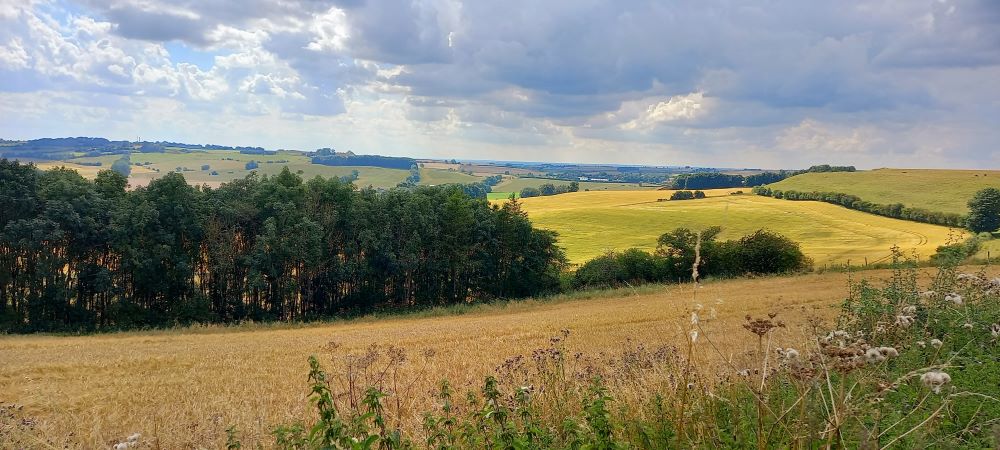
We think of pilgrims as walkers to specific religious buildings or places undertaken by both Christians and Muslims. For the purposes of this post, I mention a few of the most popular destinations in the UK, not because the walks to Mecca and the Muslim faith are not equally important, but because I draw from my own Christian experiences and historical interests. The picture below is one I took on a walk at Spilsby in the Lincolnshire Wolds in 2021.
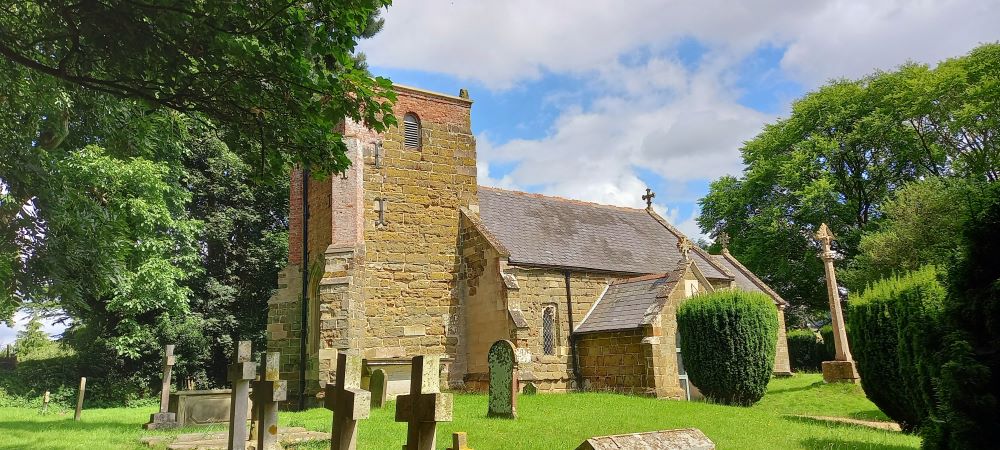
 Often, these are long journeys with a set path, resting at various intervals along the way. The last reference mentions the 12th Century in the UK as a Golden Age of pilgrimages. They span over centuries and are a focal point for people seeking miracles, redemption, the forgiveness of sins, and prayerful encounters with a divine Deity. Henry VIII visited the Slipper Chapel twice with his first wife Catherine of Aragon leaving money and lighting candles at Walsingham.

For me, I love the Anglican shrine at Walsingham. A place I crave when I seek peace, and quiet and I often take the Holy Spring water there and write my own prayer requests and light a candle. Henry VIII’s Dissolution of the Monasteries from 1536 robbed us of many precious religious sites such as the Abbey at Walsingham, though I firmly believe King Henry never left his Catholic faith to embrace the Reformation during this period.
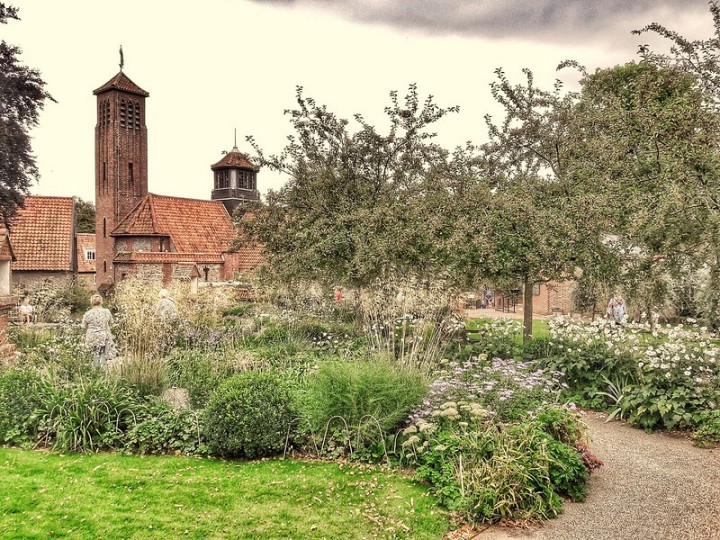
 Other Popular Pilgrimage walks and destinations in the UK:

The first one that springs to mind is Canterbury Cathedral, a place I have longed to visit again. I remember my parents taking me as a child and I distinctly remember the place where Thomas Beckett was slain by the knights of Henry II and how the Guide removed his hat in respect to the cannonised Archbishop of Canterbury. You can read a fuller historical account here.

And of course, as a lover of the Northumberland landscape and who could happily retire there to higher ground, away from the exposed landscape to flooding where I live, we cannot forget Lindisfarne, a place well known for miracles and its association with St Cuthbert.

Closer to home we have the famous Peddars Way where Pilgrims would rest on their way to Walsingham. It dates back to AD 61 when it was built by the Romans across East Anglia. It runs from Knettishall Health in Suffolk to the North Norfolk Coast near Hunstanton. Peddar comes from the Latin word ‘Pedester’ which means on foot and is part of the Norfolk Coast Path National Trail.
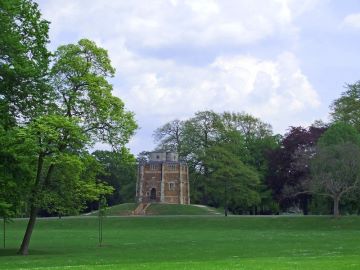
A local resting place- The Red Mount King’s Lynn:

Built between 1483 and 1485 this octagonal chapel was built, not only to bring trade into the town but as a resting place for pilgrims on their way to Walsingham. Made of Tudor brick it’s shaped with a buttress at each corner and is open to the public on National Heritage Days. I couldn’t help but think how cold it must have been, even though I saw a small fireplace inside. The walk of the Pilgrim was certainly a hard one.

Our travels:

Can we take this word and create a more modern secular definition? I think we can.

I know of friends who take off seeking family ancestry, churches, and buildings in connection with their own place in history, or people who walk for spiritual comfort, myself included, and who travel to set destinations for intentions of nourishment for physical and mental healing and rest. I feel these are all pilgrimages in some form, even if there isn’t a religious building at the end of the road.

And forgive me for mentioning ‘The Salt Path’ by Raynor Winn yet again, but wasn’t that an incredible pilgrimage to find forgiveness, healing, and hope, even if the walkers didn’t confess to any scriptural belief set? If you haven’t read my blog post book review, then take a look, you will find it listed on the right of this blog site, if you go to this site’s home page.

Furthermore, I have heard on TV programs about walks where walkers have found the church door open for rest and to find a quiet space. This is personally why I like to visit them and my retreats are not only to Walsingham but to the Lincolnshire Wolds where I see this as a very special place unspoiled, wild, and liberating. I come away totally restored.
In conclusion:

Are you a pilgrim? Could you be seeking your own pilgrimage?

I hope this blog post has given you some insight into this subject that maybe you too would like to take a rucksack and some time out to walk on a journey of discovery, and an end point where you feel refreshed and fulfilled. You may discover something more, or about yourself, than just a landmark at the end of the road.

Until next time….

Walking Steps and Sewing Needles

  |   By  |  0 Comments

Footsteps Conversations
Walking Steps and Sewing Needles
Loading
/

The Coats of Hopes Pilgrimage Exhibition.

What a simple yet wonderful idea, started by one person concerned about climate change and who wanted to do something about it. And there could be no better way than to create something quite extraordinary, not with words but still with hands. This time the pen was exchanged for a sewing needle.

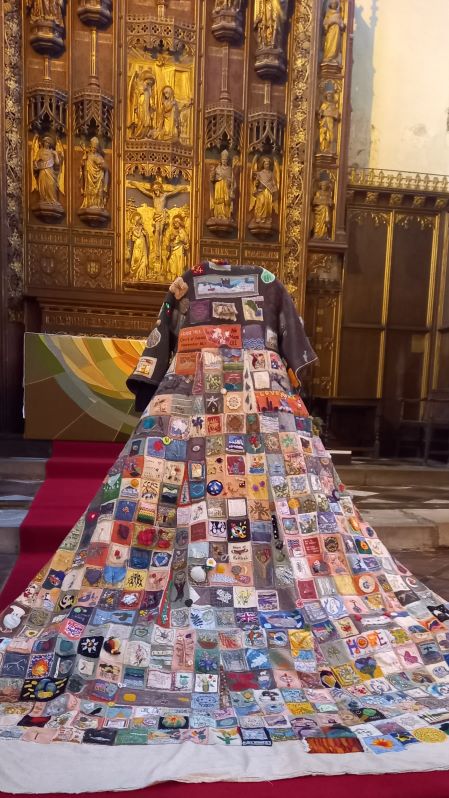
Welcome to the Coat of Hopes exhibition that I was fortunate enough to see, visiting two places near to where I live. I was so drawn to this story. In response to our ever-increasing concerns about the future of our planet, the coat was started as one piece of sewing to be worn on a walk starting from Newhaven in August 2021 to the COP 26 Glasgow, UN Climate Change conference.

Sewing hopes and feelings into the fabric:

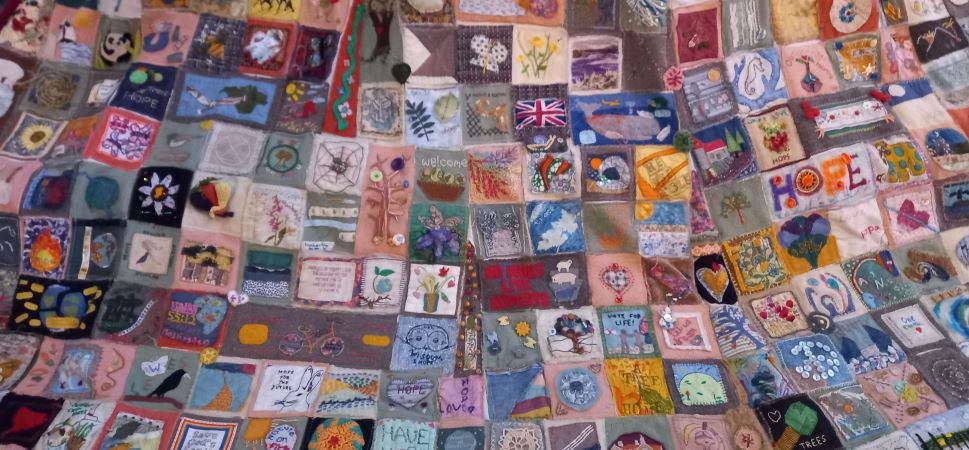
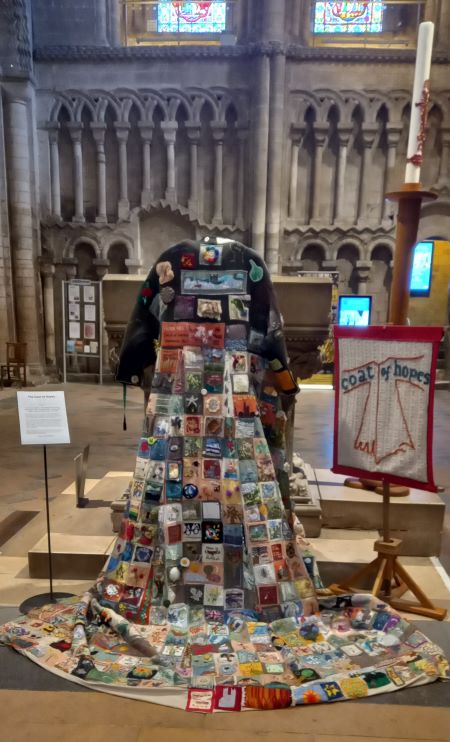
As you can see from the pictures below, people have been invited to contribute to the coat, sewing, weaving and embroidering their hopes, grief, memories, tributes, and feelings into this living piece of work, as it walks its way along the UK. Covering over 1500 miles so far, and resting in various places as a pilgrim of peace whilst carrying an important message that climate change is urgent.

I first saw it in The Minster in King’s Lynn on February 7th and thought, why not follow its journey, as it moved on to Ely Cathedral? So, I made a short journey to Ely the next week to view it there, light a candle and pause to think about my place in the world, and within the environmental emergency facing us today, as we all live in our ever-consuming world.

A close friend and I went to The Minster together. We met an old teaching colleague who was with a school party from the local Greyfriars Academy. We had both worked there as teaching assistants. This was a very happy time of my work life, and it was so good to see children drawing their own patches in pencils and crayons that will be locally exhibited. Children are the future custodians of our planet and the more aware they are of the need to care for it, then our world may still have a chance.

The coat moved on:

On my next visit to Ely, my husband David came along with me. We spoke to a Guide who was from America and who had been living in the UK for a while. We had a conversation about the alarming political changes in the West, the awful conflicts going on and man’s desire to conquer and claim through bombs, terror and ideologies. Whilst this was a serious conversation, it was also uplifting to know there are so many kindred spirits who have a deep desire for justice, humanity, and care and who stand in unity for world peace.

However, what was a piece of serendipity was when we popped into the gift shop on the way out and saw a distinct display of, by now, familiar drawings waiting for me, as a nudge that we are all on our own pilgrimages.

“ Oh, look David” I said. “ It’s Angela Harding’s drawings from the book The Salt Path” having never encountered anything like them before. So many lovely gifts to choose from and I was tempted by the notebooks (but I have so many) that I chose a paperweight instead.

Freedom to fly, and freedom to just ‘be’ were the thoughts that came to mind. Come home and sit on my writing desk and write with me, I thought, as I looked at the beautiful glass artwork. We are all walking and flying together through life.

Where next?

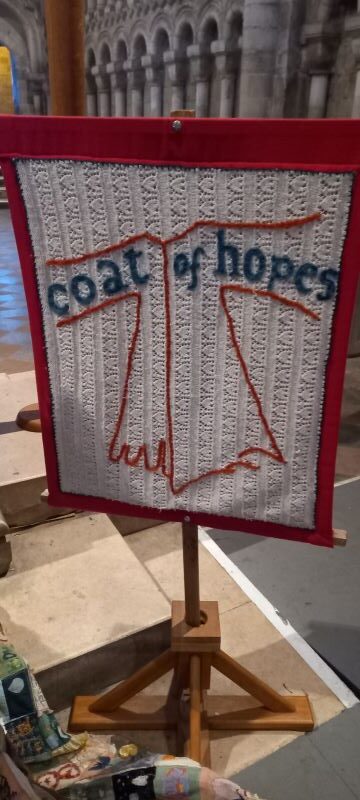
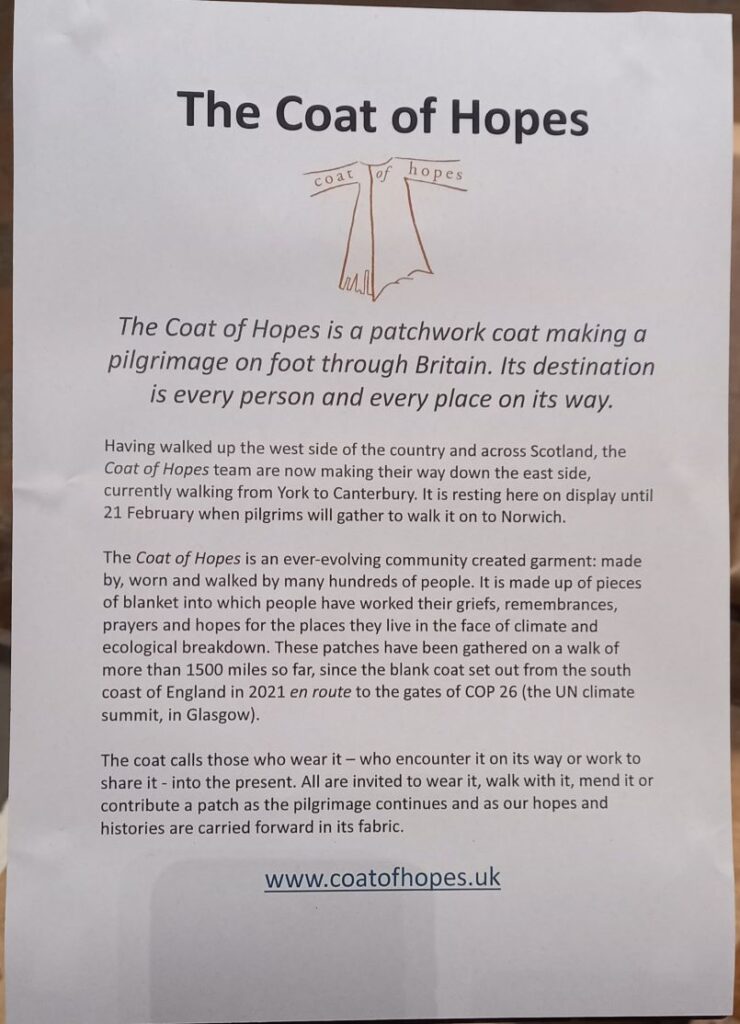
The Coat of Hope Exhibition will leave Ely on the 21st of February and will be walked to Norwich Cathedral. You can see from the image below some information concerning the Coat’s progress.

The aim is to keep going with more people sewing and walking until finally a pivotal point comes when the whole world realises that we are all going to have to work together if we have any hope left of saving this planet.

In my own corner of the world, it is predicted that within the next forty years, with the increased warming of the oceans, King’s Lynn will be under the sea, most of Lincolnshire gone and my town in Southwest Norfolk will be on the edge of survival.

How can I leave this not on a sombre note?

People and projects, scientists and researchers are working hard to find solutions to our climate crisis. We must hope that it is not too late, and that we can find some way for everyone to have a place in our modern world. Where we can reap the benefits of civilisation, the progress in better health ( having just finished a course of penicillin myself) that man can thrive, but crucially that animals, wildlife and ecosystems can live with us.

There is enough for all of us, but we have to share and we need to respect all living creatures. We must challenge corporate greed, have practical and sustainable ways to work and travel, and where money and power are seen to be all races to the bottom.

Time to embrace a pilgrimage on thinking about what truly matters most.

What matters most to you?

Until next time, when I will continue this theme on the history of pilgrimages and why people walk on them.

How do you want to be remembered? a reflective walk.

  |   By  |  2 Comments

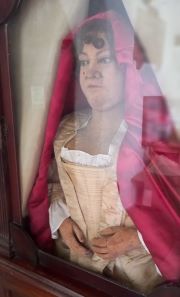
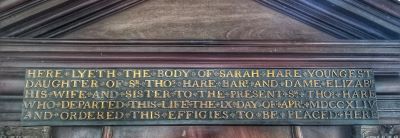
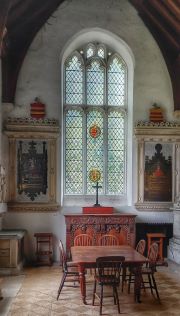
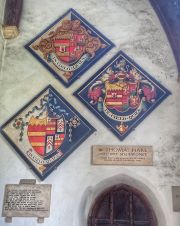
Allow me to introduce you to Sarah Hare, the youngest daughter of Thomas Hare, a family that has lived in this area since the 1500s.

I’m back at the Holy Trinity Church of St Bardolph, Norfolk close to where I live. I never knew she was tucked away here in a large, dark wooden cabinet, yet wanting to be seen. I expected her to be lying down but no, she wanted to stand up, as if death hadn’t defeated her.

( The quality of the photo is interfered by the glass reflection. I tried different angles and this one was the best.)

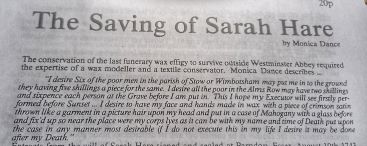
Yes, you will see something quite unusual, and the only funerary figure outside of London. She is kept in memorial in wax with her real hair, grimy hands, dirty face and piercing eyes, almost with a spookiness about them. She had given instruction that she wanted to be preserved in wax and her face was probably a life-or-death mask as she had died of sepsis from a needle work injury, at the age of 55, on the 9th of April 1744. She wore her own clothes and the red cloak was particularly striking against her damask gown.

As I stared at her, I tried to get inside her head as to why she would want to be remembered this way which poses a question.

How do you wish to be remembered?

 The theme for this week’s post is immortality, life and death. This might sound a bit heavy as the dark wooden chest Sarah is placed in within this family crypt. However, far from this post’s theme sounding morbid, this one is full of living and here’s why.

( On a side note, as I took this photo she was behind me, I could almost feel her eyes looking at me. It wasn’t scary though. It felt quite peaceful.)

I was 60 in January- quite a milestone and some big ponderings started to come into play. I might have more innings in me yet, but you also realise that time is beginning to run out. The dreams, aspirations, things not done, and places not seen become more urgent.

With the birth of my grandson last August, this was a big catalyst to start really looking after myself. I want to see him grow up, be part of his life and remember his nana for all her chatty, quirky ways and zest for living. I want to live more now than ever before.

So, I started to ask some big questions and for me write out some powerful statements about how you want the rest of your life to go.

My mission statement (Ikigai, meaning reason or purpose)- more about the book Ikigai in next week’s post.

I say and write words to positively impact people’s lives.

 This is essentially the essence of who I am. My English work at the Farm, the birth of this blog and recently helping students with interview preparation to help them succeed in their chosen jobs.

I have health, wealth and happiness every day. (Wealth isn’t just about money, that’s another post for another time.)

I can play the piano.

I can walk without pain. Note, I use the word can, not I would like, or hope too. Writing in the present tense as if it is now and done is very powerful. There is research on this, just google it.

I have several more statements, but you get the idea.

This also brings the word gratitude into play here which is a huge subject all of its own. I have an 89-year-old friend who, by most people’s standards, has led a simple life confined mostly to her town and who has only ever lived in one of two houses which are next door to each other. She lost her husband at age 61 and her son who was aged 47. My family is the only one she has, even though we are not related.

Yet, never have I seen such a display of simple gratitude which has shaped her life from one which could be viewed as narrow and sad to one of blessings and joys. She is a wonderful example of gratitude, of noticing the violets on her walk to the shops last February, to the leaves shining in the local park with the sunshine.  When any small occasion comes her way, a road trip out, an invitation, however small, then this lady is so happy as she notices the shapes of the clouds as we drive along. I will never forget her pointing out the rabbit on the road to March on an outing to my daughter’s. She has had little money all her life, but her riches are many.

So, I come back to the question.

How do you wish to be remembered?

What’s important to you?

I want to walk around the UK writing about life, health and what it means to be alive and living the best life you can, including visiting cathedrals and churches with my laptop in tow. For all sorts of reasons, and the need to work consistently being one of them, this at the moment is confined more to days out, occasional 24 hour get-a-ways and any holidays. However,it is an intention I aim to do when I can fully retire.

I want to start a local walking and writing group, ideally next year but under an umbrella organisation where I can have a safety net, insurance and guidance so other people can harness what I am benefiting from. Walking is powerful, writing is powerful but put the two together and you can have a superpower to propel you into anything you want to be. Note, I write this with caution as I am not a counselor, see my disclaimer. There is a lot more ground work to do before I embark on such a venture.

How do I want to be remembered?

Someone who did the best they could with the modest talents they have and to not waste a single second. Wasting time is not for me and to fill each day with something I love and can be proud of. This could be criticised. I am not saying family isn’t important, it absolutely is, but your life can be more than just your family or your day job.

You have a right to fulfil your dreams. I do not need to be preserved in wax. I want to fly away on the wind in dust to mix with the air and for my family to plant some snowdrops in my favourite place. My collections of writings (my best ones) will be left to the family for any creative reference and hopefully some wisdom and interest and a memory that was kind, compassionate and caring.

That to me sounds like a pretty good life and for now, I am happy to get on and live this way.

How do you want to get on with your life, if there was nothing to stop you doing anything?

Until next week…..

A Visit to a Church- solitude part 2

  |   By  |  2 Comments

Footsteps Conversations
A Visit to a Church- solitude part 2
Loading
/

In this week’s audio, I have included a small extract from the book ‘Steeple Chasing’ by Peter Ross.

Also, my writing in the church from last week’s post from St Mary’s Snettisham with edits and additional thoughts.

“I hear a pitter, patter on the roof. I have no idea what it is as it is not raining. It doesn’t sound like the wind, more like a swarm of flies, but having just walked around the whole perimeter of the church there was nothing to see and all was very quiet.

Then there is the ping of my phone. I’ll put it on silent as the two visitors behind me (glance) are praying…. Writing pauses.

Oh, the ping is from my aunt. She needs some information.

“Can you reply now if possible?”

She is trying to organise a holiday next year for us and the booking is time sensitive. Even when no one is with me, there is a presence, an example of a demand that requires an immediate response.

I’ve thought of going on a Retreat, one where no one can reach you and phones are switched off. However, you know what it is like, the tug and pull of people. I can’t turn my phone off. What if someone needs you when Dad is ill, or your daughter is trying to get hold of you?

I can see why Dr Mosley left his phone at the hotel on that fateful June Walk in Greece of which he never got to his destination, to be away from the distractions. I have given myself countless promises to get out more, just to get in the car and drive. A friend would say it’s a lack of boundaries and they would be right.

Why am I even able to sit here today? Because I’m off my childcare duties due to recovering from something contagious, now resolved, but a day off just to be on the safe side with a 10-month-old grandson to think about.

This comes back to a past post of squeezing and compressed time. As I have said before, this blog has a life of its own. Many of these posts’ subjects can overlap with common links and interconnections. This is one of the many surprises since setting up footstep conversations.

What feels certain is that silence doesn’t feel bad, quite the contrary. There is solitude and there is loneliness. You can be in a crowd and feel lonely. You can be on your own but know there is a network of people out there holding you up. I think of my penfriend in Australia. I have only ever seen her three times over the 40 years we have known each other but her presence is always there. This is one of the advantages of the technological age. Our video calls and messages, sending photos and thoughts have sustained me over many years.

Solitude is not bad for us, but loneliness is and that’s the difference. The data informs us in numerous studies that loneliness is damaging to our long-term physical and mental health. Here is just one of them.

I’m waiting for the phone to ping again, but it hasn’t. Maybe, I can sit here a little longer……..”

Are you lonely? Do you just require peace and some alone time, or are both relevant in your life?

What could you do about this?

Until next time….

If you want to read Philip Larkin’s poem, ‘Church Going’ there is a link to it here.

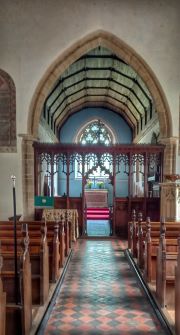
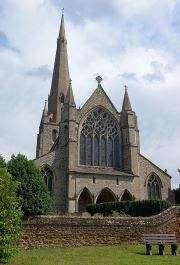
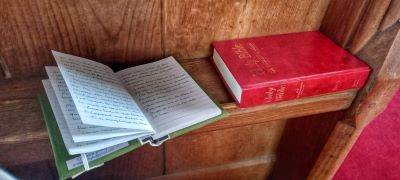
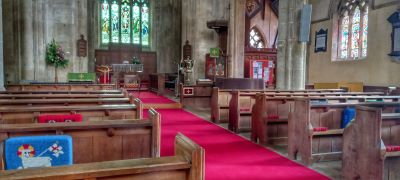
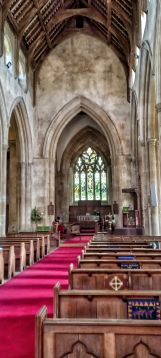
Photographs from St Mary’s Church, Snettisham, Norfolk.

‘Steeple Chasing, Around Britain by Church,’ Peter Ross, Crown, page 357, Headline Publishing Group, 2023.