Category: fitness and mobility

Pilgrimages and are you a Pilgrim? You may be surprised.

  |   By  |  0 Comments

Following on from last week’s post, I have decided to continue this theme of what it means to be a pilgrim, and why I think many of us could be one, even if we have never made a connection with the word to ourselves.

So, firstly what does this word mean? Before I dive straight into the Oxford Online Dictionary, I’m going to pause and write my own definition and then see how this translates to the formal linguistic definition.

Pilgrimage- my definition:

To go on a walk of intention to a set destination for the purpose of a spiritual encounter.

 For the literal definition here it is: Note, I haven’t taken the first definition in this link if you should want to look at the reference but this one because I think that’s what most people would agree on.

“ A trip, often a long one, made to a holy place for religious reasons.”

I have quoted here The National Trust’s description which I think gives a richer meaning of what it means to be a pilgrim.

“A pilgrimage is a devotional practice consisting of a prolonged journey, often undertaken on foot or horseback, toward a specific destination of significance. It is an inherently transient experience, removing the participant from his or her home environment and identity. The means or motivations in undertaking a pilgrimage might vary, but the act, however performed, blends the physical and the spiritual into a unified experience.”

A brief history of the pilgrim:

We think of pilgrims as walkers to specific religious buildings or places undertaken by both Christians and Muslims. For the purposes of this post, I mention a few of the most popular destinations in the UK, not because the walks to Mecca and the Muslim faith are not equally important, but because I draw from my own Christian experiences and historical interests. The picture below is one I took on a walk at Spilsby in the Lincolnshire Wolds in 2021.
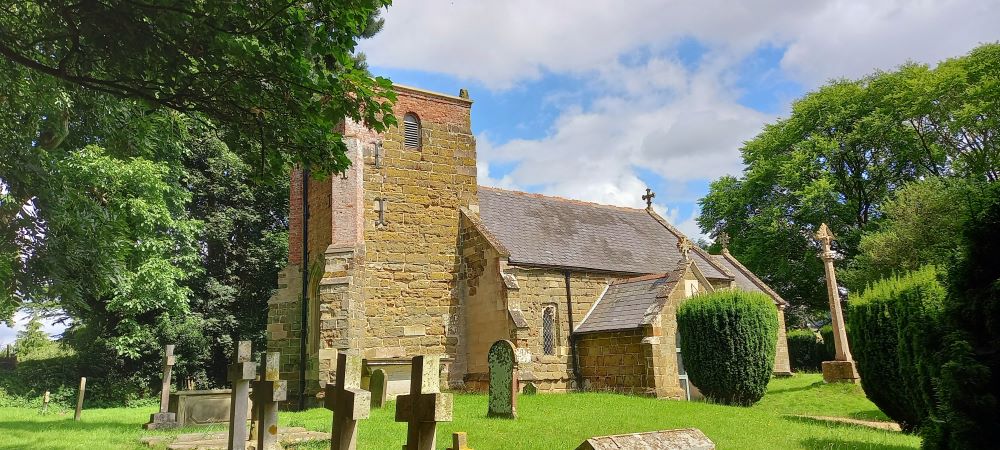
 Often, these are long journeys with a set path, resting at various intervals along the way. The last reference mentions the 12th Century in the UK as a Golden Age of pilgrimages. They span over centuries and are a focal point for people seeking miracles, redemption, the forgiveness of sins, and prayerful encounters with a divine Deity. Henry VIII visited the Slipper Chapel twice with his first wife Catherine of Aragon leaving money and lighting candles at Walsingham.

For me, I love the Anglican shrine at Walsingham. A place I crave when I seek peace, and quiet and I often take the Holy Spring water there and write my own prayer requests and light a candle. Henry VIII’s Dissolution of the Monasteries from 1536 robbed us of many precious religious sites such as the Abbey at Walsingham, though I firmly believe King Henry never left his Catholic faith to embrace the Reformation during this period.
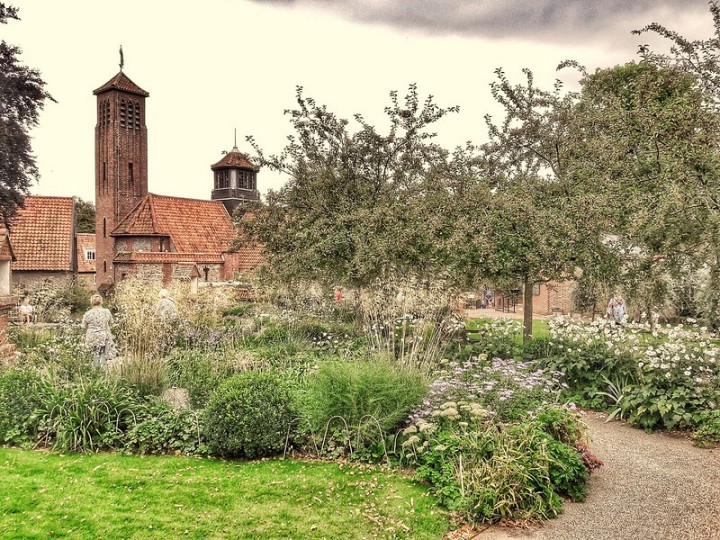
 Other Popular Pilgrimage walks and destinations in the UK:

The first one that springs to mind is Canterbury Cathedral, a place I have longed to visit again. I remember my parents taking me as a child and I distinctly remember the place where Thomas Beckett was slain by the knights of Henry II and how the Guide removed his hat in respect to the cannonised Archbishop of Canterbury. You can read a fuller historical account here.

And of course, as a lover of the Northumberland landscape and who could happily retire there to higher ground, away from the exposed landscape to flooding where I live, we cannot forget Lindisfarne, a place well known for miracles and its association with St Cuthbert.

Closer to home we have the famous Peddars Way where Pilgrims would rest on their way to Walsingham. It dates back to AD 61 when it was built by the Romans across East Anglia. It runs from Knettishall Health in Suffolk to the North Norfolk Coast near Hunstanton. Peddar comes from the Latin word ‘Pedester’ which means on foot and is part of the Norfolk Coast Path National Trail.
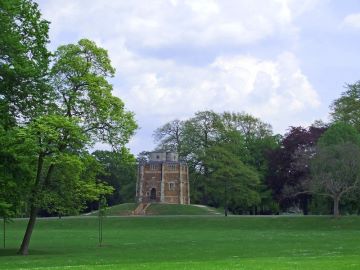
A local resting place- The Red Mount King’s Lynn:

Built between 1483 and 1485 this octagonal chapel was built, not only to bring trade into the town but as a resting place for pilgrims on their way to Walsingham. Made of Tudor brick it’s shaped with a buttress at each corner and is open to the public on National Heritage Days. I couldn’t help but think how cold it must have been, even though I saw a small fireplace inside. The walk of the Pilgrim was certainly a hard one.

Our travels:

Can we take this word and create a more modern secular definition? I think we can.

I know of friends who take off seeking family ancestry, churches, and buildings in connection with their own place in history, or people who walk for spiritual comfort, myself included, and who travel to set destinations for intentions of nourishment for physical and mental healing and rest. I feel these are all pilgrimages in some form, even if there isn’t a religious building at the end of the road.

And forgive me for mentioning ‘The Salt Path’ by Raynor Winn yet again, but wasn’t that an incredible pilgrimage to find forgiveness, healing, and hope, even if the walkers didn’t confess to any scriptural belief set? If you haven’t read my blog post book review, then take a look, you will find it listed on the right of this blog site, if you go to this site’s home page.

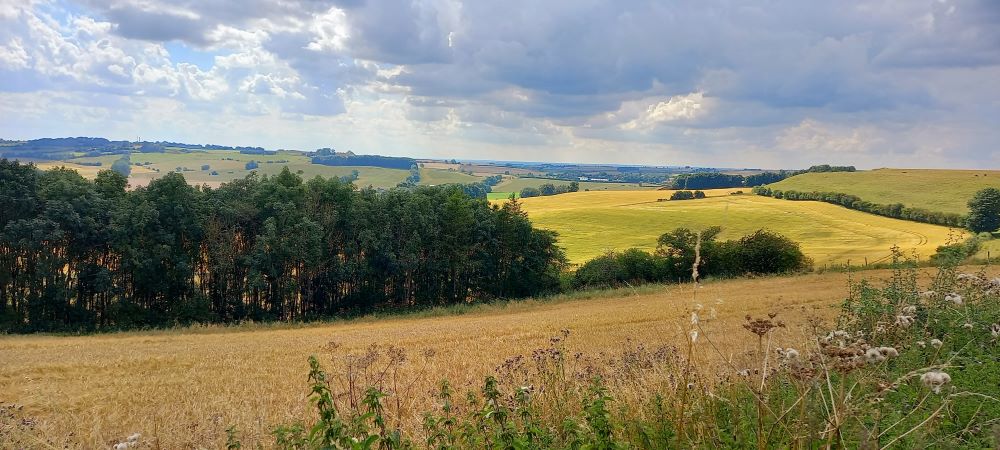
Furthermore, I have heard on TV programs about walks where walkers have found the church door open for rest and to find a quiet space. This is personally why I like to visit them and my retreats are not only to Walsingham but to the Lincolnshire Wolds where I see this as a very special place unspoiled, wild, and liberating. I come away totally restored.
In conclusion:

Are you a pilgrim? Could you be seeking your own pilgrimage?

I hope this blog post has given you some insight into this subject that maybe you too would like to take a rucksack and some time out to walk on a journey of discovery, and an end point where you feel refreshed and fulfilled. You may discover something more, or about yourself, than just a landmark at the end of the road.

Until next time….
Water, Watching, Walking- The Life of a Mindful Narrow Boater

  |   By  |  0 Comments

There is no audio this week. Rain and a persistent throat virus prevent me from taking a walk and recording a message. I have a feeling though I am too soft. Rain, sore throat and an ear ache wouldn’t have stopped the subject of this week’s blog and certainly not the people in last week’s.

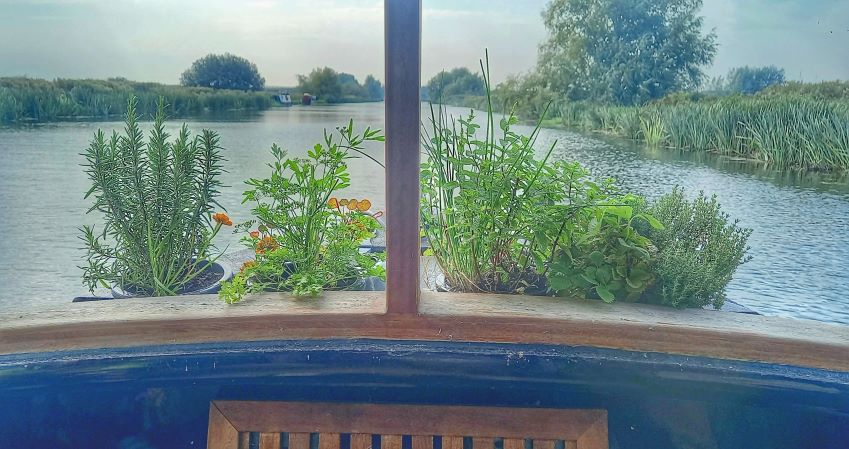
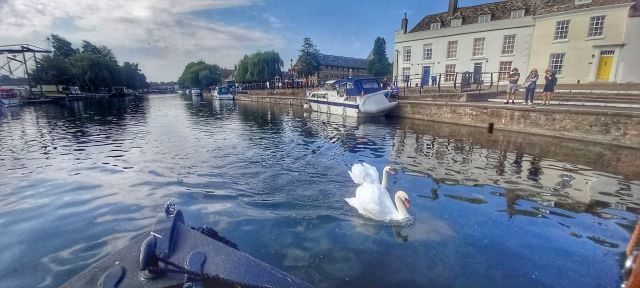
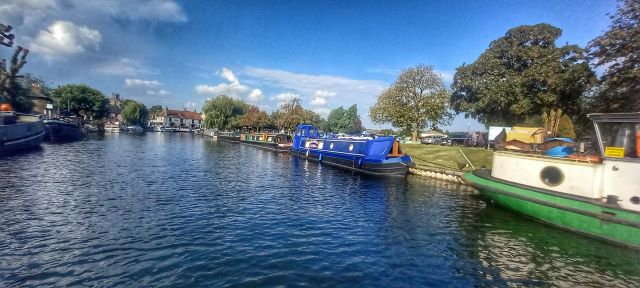
( All photos were taken along Ely River on my narrow boat trip last year)


Has Winter felt long this year? It has for me, but a recent discovery as we sit and brave out the dark nights has arrived in the form of a YouTube channel called ‘The Mindful Narrow Boat’ by Vanessa Thomas. The benefits of nature, wildlife, sunshine, walking, travelling and being outside are laid out on our screens for all to see as we float along the canals with her, be it in our armchairs.With her unique brand of creativity, she shares her life on a narrow boat with her dog Zephyr. I am sure her husband helps in the background, but she is the sole presenter.


I’m not drawn to water, not being a swimmer, but there is something about the narrow boat life that is appealing. I am an Aquarian, the sign of the water carrier, so perhaps something of that element is within me waiting to be explored. However, I think it has more to do with the gentle pace of this life and the undeniable fact that if we are to re-wild our most nature-deprived country in Europe then water has a huge role to play in its recovery.


You may remember, in another blog, my experience of a writing retreat day on a narrow boat in Ely last year. I can see why I enjoyed it so much. To be carried by the water and the soothing sound of the boat’s engine, watching the swaying reed beds and soaking up, what was then a September day, did an enormous amount of good for my well-being. A new teaching term meant that I was reviving up the work engine and this outing was a gentle way back into this after the long summer break.

( This picture reminded me of The Mindful Narrow Boater’s own boxed garden on her barge. I love it)


But I also think her enormous following says more than just her fascinating account of her life, as she washes in local history, walks, beautiful filming of wildlife and brews tea at the end (as we all wait to see what she is putting on her plate this week) in the form of cake or some tasty snack.


More of us want to ‘get-away-from-it-all ’ the increase in motor home and camper van sales, the caravans and the rambles in the countryside, not to mention the increase in flights and seeking different holiday destinations. Also, the picking up a tent and taking off with wild camping such as we saw in last week’s blog The Salt Path.


We live in an ever-fast-paced world, of noise, screens and technology. I think most of us want to slow down, decompress, go on a walk, pick up a book, or camera and just breathe. For me, the escape on a Friday night (when new Vlogs are released) helps me forget the world and become absorbed in that week’s environment. Vanessa moors and steps off her narrow boat taking us on walks to fascinating museums, towns, mill factories and other buildings of the past Industrial Revolution. This appeals to my deep love of history as well as nature.


In saying this, I am under no illusion this is not an easy life as this week’s episode mentions the practicalities of seeking water, gas, and refuse collection points as well as the fitness required to deal with the opening and closing of locks. The latter seems monotonous and tedious and it slows you down.


 It doesn’t appear you can get anywhere fast on a narrow boat, but maybe that’s the advantage. You must have patience, time and a mindset of facing challenges posed by the elements as you face each lock, one at a time. There are lessons to be learnt here as we face our own locks of obstacles, setbacks and challenges methodically overcome with patience and persistence.

( This one is a connection to the two swans in this week’s Vlog)


This brings me back to ‘The Salt Path’, a journey completed on land, not water but there is a close, unbreakable force in a relationship with the outside world. Respecting this was key to the walker’s survival and respecting the land. I suspect this is just as much for Vanessa’s life as it was for Ray and Moth’s.


At the end of each week’s Vlog, the icing on the cake for me is, once the tea is brewed, then we catch a glimpse into this week’s capture of life in poems and exquisite coloured pencil drawings of birds, flora and other observations in her journal pages, which this author and illustrator sells on Etsy. They are divine and utterly gorgeous. I bought the two back copies and will buy the 2024 edition recently released. I won’t photograph mine for copyright reasons.


So, I would encourage you to take a look, as Patrons grow (the only YouTube channel I have ever signed up to) coffees bought and subscribers continue to rise. Vanessa is truly worthy of our support and one day we want to go to Manchester to experience part of this landscape first-hand. For now, Cornwall is the first destination.


Until next time…….


(On a related side note, the film ‘The Salt Path’ mentioned in last week’s blog’s release date is April 25th). The trailer is out and it looks epic.

Hello, I’m back, What’s next and a book everyone should read.

  |   By  |  0 Comments

Footsteps Conversations
Hello, I'm back, What's next and a book everyone should read.
Loading
/

This audio is not a transcript of this post but a compliment to it. The images are mine and while they are not taken along the Southwest coast of the UK, I felt they reflected the mood of what is written here which discusses The Salt Path, by Raynor Winn. Do read on as this is a book everyone should know about.

An extract from the prologue.

“We ran back down the beach, the swash landing far above the shelf and rushing over the sand towards us.

Wait for the backwash then run to the other side of the channel and up the beach.

I was in awe. This man, who only two months earlier had struggled to put his coat on without help, was standing on a beach in his underpants holding an erected tent above his head and a rucksack on his back saying, run!

Run, run, run!

We splashed through the water with the tent held high and climbed desperately up the beach as the swash pushed at our heels and the backwash tried to push us out to sea. Stumbling through the soft sand, our boots brimming with soft water, we dropped the tent down at the foot of the cliff.”

The Salt Path by Raynor Winn, Page two.

The beginning:

I can’t remember exactly when or where I first heard about this book, but it had been on my list as a ‘maybe’ read for quite some time because it clearly was about walking. After Christmas, with book vouchers in my hand, I decided to walk into our new local bookshop and it was there ready and waiting for me to buy.

I read the first 22 pages and stopped, saying to my husband you must read this. For the next week, it was read by him with a speed that astonished me, as much as this couple running to safety on the beach.

 My husband, who had not read a book from cover to cover in over twenty years, sat and absorbed every page, like the water soaking into the South Coast sand. I knew then that this non-fiction story was very powerful, even before I properly got to read it myself, because of his reaction and the attention it received. He was transfixed, moved, sometimes nearly to tears, as he told me little snippets, not wanting to spoil the story for me. The couple in this novel embarked on an epic journey, walking the 630-mile Southwest Coastal Path.

So, what is so special about this book?

It can be summarised very simply. This is a tale of unbelievable resilience, determination and bravery in the face of the most extreme storms in life. A couple who had lost a legal business dispute, lost their farming business, their home and their life savings in the space of a week. And when you think circumstances couldn’t get any worse, the husband of the couple was diagnosed with a terminal neuro-degenerative illness.

There was nothing to lose because they had lost almost everything:

With £320 left and a barn rental, which meant they were eligible for £48 a week in tax credits, they bought and packed up in two rucksacks, a tent, two light sleeping bags and some essential provisions.

With limited space in mind, they also bought Paddy Dillion’s book ‘The Southwest Coast Path: from Minehead to South Haven Port,’ a small guidebook, with a waterproof cover and an Ordnance Survey Map.

Raynor describes the day they walked away from twenty years of family life, running from the huge chasm that had been left. All they knew was that they just had to walk, to try to process what had happened, to find themselves again, and all that mattered was that they should just start because what else was there to do?

Did they complete the journey?

Yes, they did but I won’t spoil the story for you, you should read it for yourself. They had to walk it the opposite way around from the guidebook because they started with the easiest section first due to the approaching Winter weather. So, they did have to pause and take a break, and what should have been a few weeks took them a year.

At the end of the book, Raynor writes:

“At last I understood what homelessness had done for me. It had taken every material thing I had and left me stripped bare, a blank page at the end of a partly written book. It had also given me a choice, either to leave that page blank or to keep writing the story with hope. I chose hope”

From part six Edgelanders chapter 21 Salted, page 272.

What does this book tell us?

Firstly, to never underestimate the power of walking, Moth (the man in this story) managed to defy all medical odds and walked the path coming out stronger on the other side. More than a decade later he is still alive and started a new career.

That with resilience, bravery, fortitude and courage you can face the most impossible of circumstances. As they walked, they faced hunger, cold, and immense challenges most of us couldn’t have coped with. As they faced the most gruelling conditions, problems,abuse and setbacks, I could feel my brain physically tighten with the pain of the stories’ grip and felt elated when they had a victory however small. It felt so real within the pages.

How did this book speak to me?

Once I had finished it, I thought, how could I ever complain about anything ever again. That my life and its struggles were nothing in comparison to what these two people faced. However bleak or dark your situation looks you have a choice to be the victim or the victor. And how crucially, out of the empty devastating loss, miracles and new things can grow as lives are reborn and shaped into something amazing.

It taught me about the enormous prejudices homeless people face as they were shunned, walked past and ignored as some people withdrew in fear thinking they were no more than criminals, alcoholics or drug addicts.

The amazing power of two people totally committed to each other and a love that endured everything.

What happened after?

We are now reading the sequel ‘The Wild Silence’. And there is one more ‘Landlines’ where they walked from the Scottish Coast back to Cornwall. What I can say without giving away too many details is that they now champion the plight of homelessness. Raynor writes about nature and wild camping and both participate in charity events to raise money for Corticobasal Degeneration, CBD.

What are we now going to do with our own Salt Path?

Having been so inspired by this story, we want to see this path ourselves. We have booked to go to Cornwall in June staying in St Austell, one location near the path. We won’t be wild camping or homeless and we will have more than £48 spending money for the week. In many ways, I think we will feel shallow that it is too easy for us to stand and stare, taking a short walk (as holidaymakers) given our health complaints.

But, I hope we will come away with the enormity of what they did, the respect and admiration, and maybe we can be a little less fearless ourselves in our own lives and be grateful for each and every day with what we do have. I hope so. I will update you once I have read all three and have been on this trip.

The Salt Path by Raynor Winn is published by Penguin Books, Random House UK, 2019 and is being released as a film this year- the Sunday Times best seller and Costa Book Awards, shortlist.

Finally, I hope the people who treated them badly watch this and see their own character starring back at them and will leave a sobering and humble thought.

Until next week….

Moving Towards Improved Brain Health

  |   By  |  2 Comments

It was the year 2010 and Dad, then aged 82, had come downstairs early, as he always did and sat in his chair, savouring the quiet morning. Only on this day, something didn’t feel quite right. Meanwhile, two doors down the road, an elderly bed-bound neighbour had accidentally pulled her alarm call button and this had triggered an ambulance response. Dad visited her daily to fetch the coal in for her fire and a chat. He later said she had been his guardian angel that day and had saved his life or prevented permanent disability.

Mum came downstairs and phoned my brother (in a panic) who then phoned 999. Dad couldn’t speak. The call came into the ambulance crew’s radio who were now two doors down. Realising the neighbour had made a call error, they were with my dad within five minutes and he received the magic of the Golden Hour, as far as receiving first-line treatment. Dad had suffered a major stroke.

By the time I managed to get to the James Paget hospital in Gt Yarmouth that evening ( my nursing team said we were too busy for me to get the time off work) I remember him sitting in the chair, his hands behind his head wondering what all the fuss was about. He made a full recovery.

However, it wasn’t long after that his eyesight started to deteriorate, and macular degeneration was diagnosed. Suddenly his life was turned upside down with a severe loss of sight. Woodturning, painting and driving were all gone very quickly. Approximately, 10 years after his stroke, cognitive impairment was diagnosed and this then proceeded to vascular dementia. A cerebral vascular accident is a known risk factor for vascular dementia and can occur within ten years of the incident. Dad fitted this time pattern.

Vascular and Alzheimer’s dementia are two words, along with other forms of dementia which sends a shudder through anybody who knows the living reality of this disease. Not seen as a medical disease but as a social disease, it robs people slowly of everything, slowly, cruelly and bit by bit. Loss of independence, loss of dignity, homes sold to cover care costs, life savings reduced to almost nothing and eventual loss of life.

Dementia is now the biggest killer in the UK from figures in 2022 and there is still no cure. But what is being discovered is how crucial vascular health is to our brain health. Whilst we mustn’t dismiss our fight against cancer and heart disease itself, people are beginning to sit up and take notice that our brain, the powerhouse to everything, deserves a more thorough look at how we care for it and what must do to protect it, to give us any chance of preventing or slowing the risk of dementia.

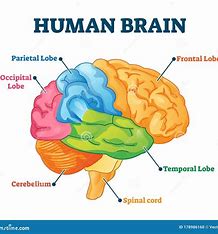
This last week, I watched on You Tube, The Diary of a CEO and Steve Bartlett who was discussing brain health with an eminent neuroscientist. He held a human brain in his hands. It was one of the whose epiphany moments for me. Steve spoke about how every thought, intelligence, creation, life event, experience, grief, job, hope, relationship is within this soft ball of what feels like tofu. What an incredible thing the brain is and how it contains everything about who we are.

There is still so much we don’t know about this organ. Some people firmly believe that the power of the mind can heal disease. Louise Hay in her book  ‘You Can Heal Your Life’ ( see My Library) refers to her cure of a gynaecological cancer and Mary Morrissey ( another personal development mentor and manifestor ) talks of the power of the mind as she was cured of a potentially fatal kidney disease. I also see on X (Twitter) amazing people who are defying all the odds with stage 4 cancer because of utilising the power of the brain. Whatever you might think, I believe there is something in this to be noted.

In this interview, Dr Wendy Suzuki emphasises that exercise, enough to raise our heartbeat, is key to keeping what she calls a physically healthy big, fat, and fluffy brain. A brain that has the ability to have neuroplasticity—changing and developing new neural connections by challenging it, learning new things, and having strong social connections.

I also believe stress plays a huge part too in the development of Cerebral Vascular Disease. My dad walked a lot and was very fit and active but that didn’t stop him from having a stroke. The stress of caring for my long-term sick mother I feel played a crucial part in this.

From last week’s post looking at sleep, to my post Ikigai- finding your meaning and purpose, there seems to be a cycle that comes around to a full circle of where what we do, how we feel, our habits and actions all influences our brain health.

We have to start asking the question what are we doing today that could harm this incredible piece of tofu-like substance that literally houses everything that has happened to us and shapes who we are?

I would encourage anyone to look at the full interview with Steve Bartlet here, especially the first hour.

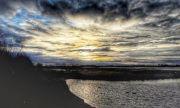
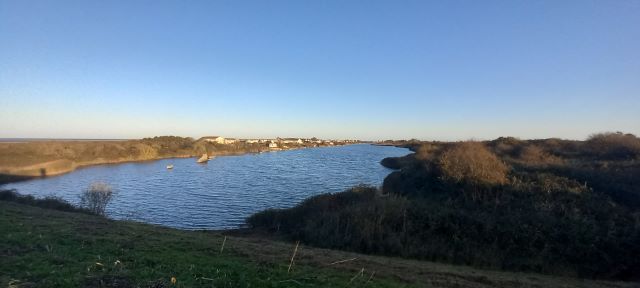
Similar to last week’s post on sleep, I can’t say everything here in one attempt and more will follow over subsequent weeks. For now, I leave you to look at two of my early morning walk photo from a local RSPB nature reserve Snettisham as one of my activities to get better sleep ( one factor crucial for brain health) and ask yourself how well do I look after my brain?

Until next time, where we begin a topic that is a focal point of everything- our habits.

Image of brain copyright accessed @microsoft.com October 29th 2024

Why Sitting is not Good for Us. (Part 2)

  |   By  |  3 Comments

We are busier than ever and there is a general belief that we should pause, be still and slow down to not get overwhelmed, stressed or burnt out. But what does good quality stillness look like, given the research that tells us we should be moving more? Stillness doesn’t necessarily have to equate to the silence of the body, but stillness within our mind. We can walk, move, breathe more and still experience a quietness of the soul.

You have probably heard of the expression the busy but sedentary lifestyle. I typically have fallen into this category with my life and its demands. However, it is sobering to look at the data to see why sitting at our desks, or in front of the TV after a hard day at work is killing us.

 Here are some facts:

These are quoted from reference one at the beginning of Mel Robbins’ Podcast featured on YouTube.

A study of 800 people found that you had a higher risk of the following for people who sat the most.

A 112% increased risk of diabetes.

A 147 % increased risk of heart disease.

A 90% increased risk of death caused by heart disease.

An overall increased risk of death by 50%

It is also stated that there appears to be a direct link between sitting and our ability to cope with stress and burnout. When we move a whole cascade of chemical reactions occur that benefits us both mentally as well as physically.

What I do to move more and the challenges I have faced:

Getting up in the morning:

I drink a glass of water first thing and get out of bed as soon as possible, even if I return to it, and I mostly do if it’s early. I’m not great with morning exercise, often skipping it but when I go downstairs (We have a house with three flights of stairs which is good.) I do 10 minutes on my ankle peddle machine. The knee rotation of a cycle action is the best thing for my arthritic knees. I do this every day.

Workday:

This has been a game changer for me, not just in performance planning lessons and my working week productivity but also in being able to move more.

I always thought setting timers for work seemed quite rigid and almost obsessive but they work brilliantly for me. I set my phone alarm every half an hour when I lesson plan. It helps me settle and focus on the task at hand, then the alarm goes off and I stop, pause, take my weights and stretch. I look out of the window, soak up the view in the distance and walk up and down the room for a couple of minutes. Then I return for another work session. I do this every 30 minutes for a total of 90, then have a tea break. I then return for another 90 minutes of work, repeating the routine, before stopping for a longer break. This is the best way I have found to get exercise incorporated within my working day and it’s quick and easy to do and crucially I do it!

In the Kitchen:

Making tea, I just move, my knees and hips usually, to loosen them up, often with some sidewalks or kickbacks while the kettle is on. I do some hip rotations and abdo pull-up’s, good for us post-menopausal ladies and a weakened pelvic floor. This is good for my back. I do this whilst waiting for the kettle to boil.

Watching TV:

I just remember to intentionally get up, move, and stand even when I’m watching a programme, or get a drink but just move for a few seconds.

Meal prep:

I have no dishwasher. I have longed for a dishwasher for decades, but since recently having a new kitchen, I now enjoy washing up with a bigger sink and see the benefits of it. We need to return to some manual tasks if we can, rather than every device doing it for us. I don’t have Alexa, another AI gadget that is making everyone not even throw the lights switches on. This is not good for us.

Standing desk;

I don’t have a standing desk because of my back problems. I find standing in one spot difficult for me and personally think standing for long periods isn’t necessarily good either. It’s not certainly not good for anyone with varicose veins as I’m also a past example of that. However, I will leave a link in the references below if you think it might work for you, as I have read there are benefits to standing whilst working. This source has some new information for me to reconsider.

Housework:

 I would love a cleaner if I could afford one. I took a cleaning job to help ends meet once in a school. It nearly killed my joints. The massive hoovering alone saw my back in two after three days and a trip to the chiropractor. I managed this job for three months. So now I do small amounts of housework, but realise getting a cleaner at 60 years of age is not a good idea. It’s that balance of letting age not get the better of you, as well as being realistic about what you can do whilst staying active. Housework helps us with strength and resistance exercise, something we must have if we are older as muscle mass becomes less and we are more prone to falling. Balance is also key to not falling. I stand on one leg regularly if I do some yoga practice.

Gardening:

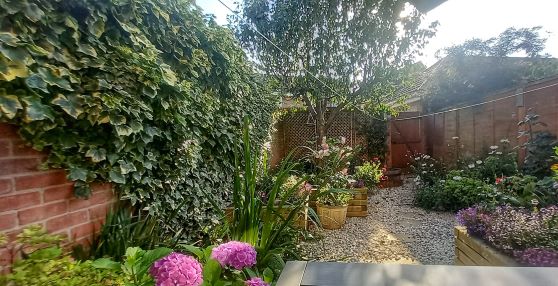
I wish I could do this more. Weeding, bending and digging kills my back and knees but I do small amounts and sit on a stool, rather than kneel. We have a small manageable garden here at home. There is a whole stack of research as to why gardening is good for us and on the list of social prescribing activities from GP surgeries to benefit our physical and mental well-being. I will leave a link in the reference list below.

Walking:

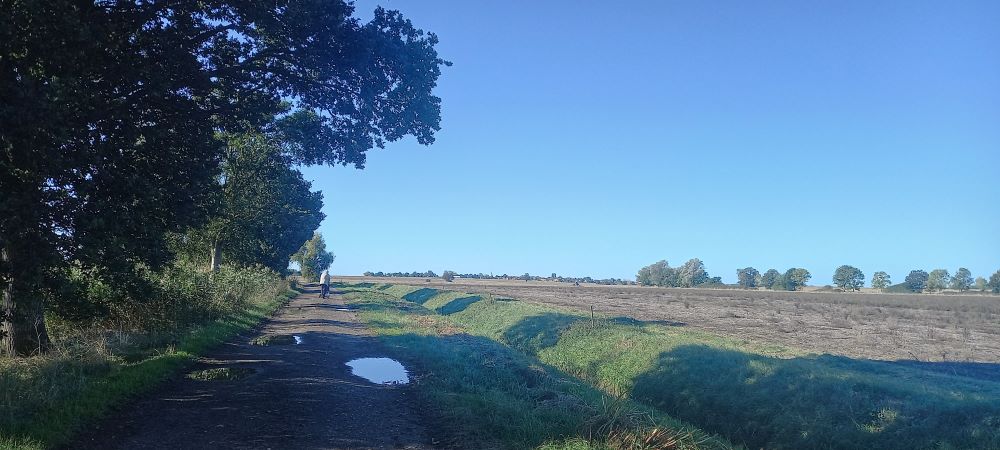
This is what I can do the best. I can’t swim (water phobia) and can walk for up to an hour comfortably. I am better when I can stop, rest, and then carry on. I have a lovely walking friend who is aware of my needs, and we walk for just the amount of time for me. She hasn’t said anything but I’m aware of this and am grateful she still hangs out with me as her walking buddy. The above photo was taken last week when walking was incorporated into looking after my grandson. You will see my husband with a pushchair in the distance.

Built-in routines:

I have started Pilates on a Monday night for one hour at a local centre. If I have built in an activity during my day I have paid or committed to go to I will do it. Saying I will do some exercise in my bedroom usually means I won’t do it. I’ve just completed my third weekly session. I can’t do all of the exercises, adapting where I need to.I am shocked at how rigid and inflexible I really am, as someone who has been active and relatively fit all her life. I hope to improve and after the third session (this Monday) felt I had slightly.

Smartwatch :

A friend commenting on last week’s post mentioned he uses a smartwatch as an alarm set to get moving. I don’t have one but maybe it should be on my present list. Have a look here and see what you think.

So these are my thoughts and conclusions so far. This is a big topic which I’m sure I will return to. Hope it has been helpful and thought-provoking as to how much you sit and what you might like to do to change that, given the science available to us so far. I’m sure this is going to become a much ‘hotter’ topic in the future as more evidence emerges as to how long periods of sitting is detrimental to us.

Next week, I want to turn my attention to the subject of sleeping.

Until next time, take care…..

References;

Mel Robbins Podcast https://www.youtube.com/watch?v=pyIboe6YzjU&t=369s

Why gardening is good for us at https://www.rhs.org.uk/advice/health-and-wellbeing/articles/why-gardening-makes-us-feel-better

Is sitting is the new smoking? https://www.ncbi.nlm.nih.gov/pmc/articles/PMC6187798/ This is a critical look at the evidence. The conclusion from this paper is that the two carry very different risks, and while sitting for longer periods is detrimental, it can’t be compared in the same way as the dangerous effects of smoking.

I hope I have given you some food for thought.

Why Sitting isn’t Good for us.

  |   By  |  2 Comments

Footsteps Conversations
Why Sitting isn't Good for us.
Loading
/


The audio is not a transcription and leads us into the subject of today. I would recommend listening to this first. It is less than two minutes long.

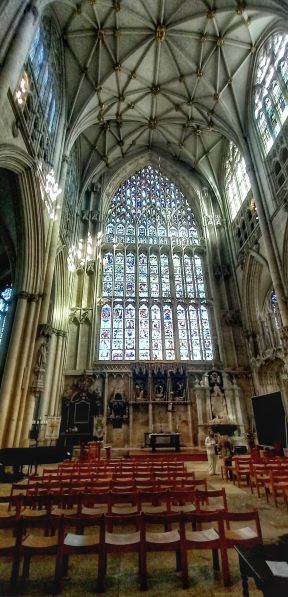
( This picture was taken while I was sitting for a few minutes in York Minster this last week)

I returned from York last Sunday. There had been a lot of sitting in the car because of the traffic due to road closures and accidents. Getting to our destination had taken several hours. What should have taken three hours took much longer.

Thinking about this week’s post, I have decided to focus on the subject of sitting. Why is it so bad for us, and what can we do within our C21st lifestyle to mitigate its risks caused by it? Upon returning home I started to listen to a Podcast by Mel Robbins about the subject and felt this was worth exploring. So here is what I am going to do.

Over the next week, I am going to consciously think of ways I can increase my standing and mobility whilst working from a desk largely at home. Also, to consider how long I spend driving to and from work and going about my day- to- day life.  I will record what I have done and how I have felt. Simultaneously, I will gather more information about the benefits of not sitting still for long and crucially the statistics for why sitting for long periods is so bad for us.

I will then share these results in my next week’s post. In the meantime, you might want to think about your own occupation and whether sitting for long periods has been a problem for you, or something you want to do something about.

Having both a long-standing back problem and osteo-arthritis of both knees was a big factor in my decision to start walking, knowing this activity helps. Now, I think the evidence suggests this goes way further than maintaining general fitness and joint mobility levels.

That’s all I want to say for this week as I am getting back into my new weekly work routine which is largely going well. Do listen to the audio if you haven’t, as it is a good connection to this post and demonstrates how I like to keep this blog on the move as I record whilst going about my daily life.

Until next week……..