Category: personal development

Rest and Reading- reasons to choose a book

  |   By  |  0 Comments

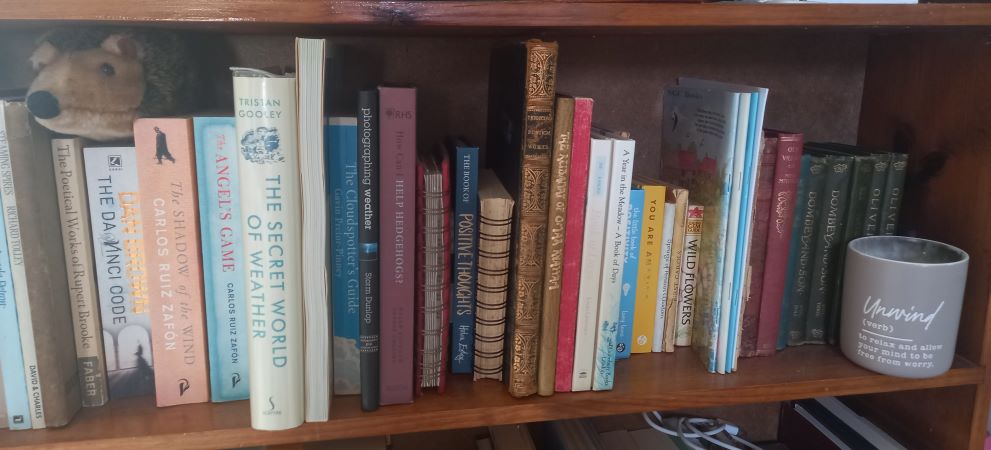
Continuing my theme of rest and leisure, I mentioned at the start of my holiday my re-reading of the book ‘The Art of Rest’ by Claudia Hammond. In my walk this week, I wish to write about the why we read, which scored the highest in the 10 activities outlined in this book regarding relaxation.

Firstly,I would like to ask a question.

If you are a reader, why do you read?

If you don’t read, why don’t you?

Why do I read?

Here are my thoughts about the benefits of reading, expressed as a poem that explores both fiction and non-fiction texts.

                                                                  Rest, Read and Reason

How many worlds do we find in books?

The plot lines, people, timelines and hooks,

Into the many minds of

Storytellers

Scholars

Saviours and

Shepherds

guiding us through their words of wisdom or wonder

as we pour into the pages

Forgetting

Loosening

Pausing through life

and all its strive.

How many times do we turn a page

The content, chapters, lines to gaze

Into the many covers of

Emerging

Evolving

Enlightening and

Enriching

guiding us through their journey of either fact or fiction.

As we pour into the pages

Searching

Hoping

asking for more,

as we walk through their door.

Opening the passageway to

Knowledge

Imagination

and freedom of expression.

Knowing there are no limits to where we might go,

on venture and voyage

of discovery and delight.

Tales in paper binding formed

and weaved together to create

a tapestry called life and living

that can never be hidden.

Spilling consciousness on to the page

of hopes, ideas and art.

A canvas of paper

In black and white

yet revealing all its colours.

To read captures all of this

No wonder many people love its bliss.

@Helen Marshall August 2024
To pick up a book is good for us:

There are a whole host of studies as to the many benefits of reading. Here is just one which you could read.

.The evidence is clear that reading is good for our emotional and physical health.

When do we like to read?

For me, I find it easier to read at night and unwind before sleep. In the mornings, I like to listen to music and prefer to write or work on my lesson planning. Reading at the end of the day, when the work is done, is psychologically good for me, and is a relaxing reward for the day’s activities and commitments.

How many books do we buy and is it increasing?

Having explored some data on this, it appears we bought more books during the COVID lock-down have been exploring different types of books and ways to read. In ‘The Art of Rest’ the author cites that in 2018, in the UK, there were 1.6 billion book sales.Take a look at these statistics if you enjoy numbers on the growth of book purchases, including reading in digital format.

However, the way we read appears to be changing as we purchase more e-books and listen to audio books. Reading demands a high level of cognitive function and I’m wondering if the same brain work is required for listening to audio books. I am curious to do some more research to see if there is any cognitive difference.
As we journey through books, how is it different to other forms of leisure like social media or TV?

At a bookshop, library or shopping online book stores, we choose our book with an intention. Even if we browse the shelves, we are often looking for something specific. This is very different to scrolling for news to read on our phones or glancing through the TV guide. We enter a world of our choosing or because we are intrigued by what lies behind the pages. Reading helps us focus and increases our attention span while social media can do the opposite.

Finally:

Social media had led me away from physical books but now I’m embracing them again with renewed vigour. I have tried a Kindle and even an audio book, but nothing compares to the smell of fresh, crisp paper, a book cover and pages to dip into. I tend to read more non-fiction books, but recognise the value in being transported into another world with a great story. I would like to read more fiction, not just for increased creative writing skills but solely for pure pleasure.
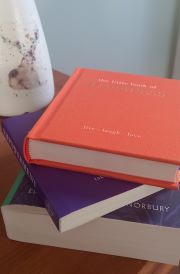
I hope you too can be persuaded to give reading a closer look if your gaze has been elsewhere.

Until next week…..

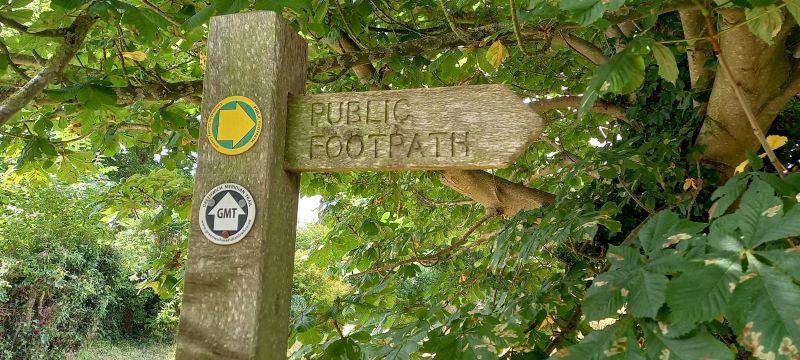
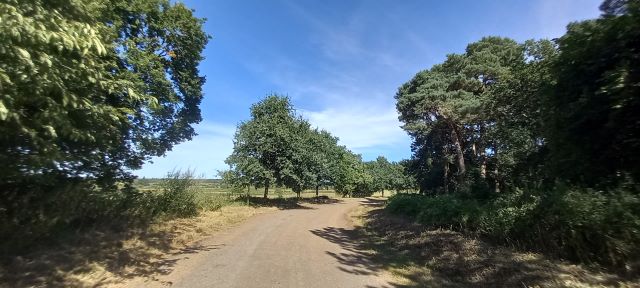
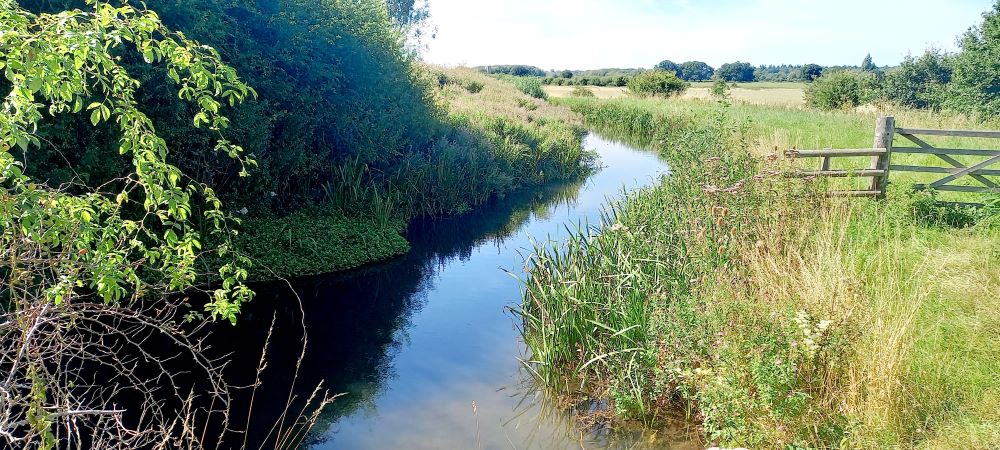
Photography is from my walk this week at Castle Rising, Norfolk on the old road by the chalk river. It was a perfect hot, sunny day with the clearest of blue skies and the sheep were shading themselves from the sun within the cooling trees. It is one of my favourite walking places.

So Near and Yet So Far

  |   By  |  2 Comments

Footsteps Conversations
So Near and Yet So Far
Loading
/

“Failure is success in progress.”

Albert Einstein

A definition of the word failure from the Cambridge Online Dictionary:

“The fact of someone or something not succeeding.”

A personal perspective of re-framing the word/feeling as a result of not succeeding in a set goal or task.

As I walked with this word these are the thoughts that came to mind in the light of my own experiences:

The opportunity to do things differently.

A result from which I can learn and grow from.

The choice/chance to take another direction.

Success is just around the corner.

Something better is going to come to you.

To evaluate what I should/could be doing differently.

The wake-up call to not keep pushing the wrong door open.

The chance to pause, be still and think about what I should be doing next.

A stepping stone from which I can propel forward.

An acknowledgement that I did my best but this is not for me and that’s OK.

A loss before a win.

Putting a slide- rule over a decision and taking a long hard look at it.

A pothole in the road you can’t avoid. You can walk over it, or you can walk around it but keep moving on.

When failure occurs you get to choose (depending on the circumstances) which one of these reframings you decide on and which fits your best situation.

For me, the sentence expressing a feeling that something is not right is the one that speaks the most with an area of my professional work coming under review.

To heal from failure:

It’s OK to say I am hurt, feel the pain and don’t try and cover it up. Sit with it, alone, in silence with coffee, with family and friends. Take your time and only you will know when you are ready to take the next step.

The hardest but most important thing of all is, don’t compare yourself to others. Focus squarely on yourself- so in this case you can be selfish. Give yourself lots of self-care for repair. You will be writing your prescription for healing (in doing so) that is unique to you.

Sometimes, your circumstances will mean you can’t sit for long because of a commitment you have to another- a student, a family member or an employer. Get out of bed and show up, however hard it is, because that momentum will force you out of a sinkhole of sadness and mental paralysis. Do what needs to be done and then pause, and take a rest when you can.

Try to keep the ego out of failure. This is not easy as our self-esteem have been bashed but hurt pride could force you into an action that leads to another mistake. Detach the ego with the result you have just had, and this will allow you to look at it more objectively and help you make the next step less likely to be the wrong one.

Above all, don’t hurry, create some space and take your time even if your day-to-day routine has to be active. Your rational self will come up for air. Failure makes you vulnerable, acknowledge it and give yourself time to think through the bigger picture. You could be just one move from getting that next decision right, or one move away from compounding the error.

Realising failure means that you are fully living. It shows you are prepared to take risks, rather than hide in the shadows. You are experiencing all life has to offer, the opposite of stasis, procrastination or just existence.

To experience failure is to know that you are embracing life in all its yin and yang, ebb and flow, ups and downs, black and white, push and pull, opposite forces, good and bad.

For me, the biggest failure was a catalyst to find a whole new path where eventually I would find the greatest happiness and success. I didn’t realise it at the time but it opened up a gateway of opportunities that I never thought were imaginable.

In conclusion:

Ultimately you and your thoughts get to choose what happens next

Acknowledge it

Feel and sit with it

Take responsibility for it

Realise that whatever has happened the result is in, and you can’t go back and change it

It doesn’t have to be repeated

Be big enough to say I made mistakes, but that could have been out of fear, panic, not knowing, inexperience, poor tuition, lack of support or temporary skill or just plain bad luck.

Say ultimately this wasn’t for you right now. It may be in the future, it may not but usually what happens is for a reason and it will all come good in the end.

You can be victorious, but you will doubt it for a while. Give yourself grace and time to rise to see beyond the defeat.  

Don’t compare failure to shame- know the difference. The ego is hurt, yes, but shame is often a feeling when you have done something wrong causing hurt to others and that is a completely different curve ball.

I feel I have only touched upon this subject and may need to come back to it. I leave you with one final statement which my experiences have taught me the most.

Above all failure teaches us humility and compassion.

Until next week…………..

Reference https://dictionary.cambridge.org/dictionary/english/failure accessed online 5th August 2024.

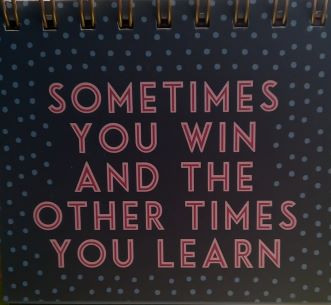
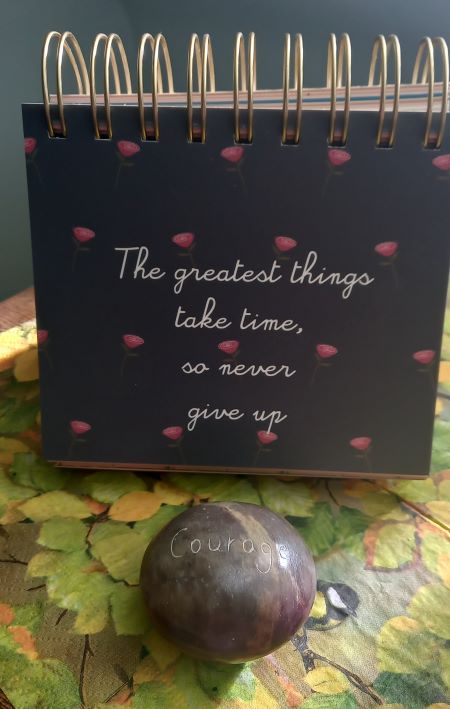
Images from Positivity Flip Chart, A Positive Phrase For Every Week Of The Year, Lisa Angel @Floral Positivity Flip Chart, Norwich, NR136LH.

Walking with an Ikigai

  |   By  |  2 Comments

Footsteps Conversations
Walking with an Ikigai
Loading
/

( I suggest you listen to the audio after reading this post)

I’ve just woken up from a lovely dream. I was in a favourite garden with all my friends. The sun was shining, and people were enjoying themselves. People I cared about were laughing, eating, and celebrating something good. The energy was high and the feeling was good. Life felt great and with lots of meaning and connections.

I come back to the present moment. It’s raining again, with the usual grey skies this summer is giving us. Once upon a time, this weather would have sent my spirits spiralling but no longer. I lay in silence listening to the rain and my energy is high and I feel such a sense of gratitude because of where I had just been in that dream. I thank the Universe for the life I have now and the people in it.

Every day I wake up I feel the same. Waking up and then getting up was once difficult for me. When you are in the grip of deep depression everything is weighed down by treacle, a heavy force that keeps you trudging through life. It’s exhausting; your senses are numbed and your energy is almost empty.

That has all been flipped on its head. It took years, about three amazing pieces of luck or miracles. However you wish to look at it, for me to arrive here where I am today, I have truly found my Ikigai.

Let me introduce you to the book ‘Ikigai- The Japanese Secret to a long and happy life.’ This work researches the human experience but crucially what it takes to live a long and happy life. This post is not a book review, this would almost miss the point. Instead, I want to digger deeper as to why having an Ikigai (a purpose for living) is so powerful.

I was talking about retirement recently and what that looks and feels like to the individual. There is a huge amount of evidence to say that retiring isn’t a positive thing to do, quite the opposite. I think we can all recall hearing of how one person retires one week, and they are dead by the next. Then we can look at the examples of working until you are in your 90s with such a powerful sense of purpose, Sir David Attenborough springs to mind and you might want to read the example I give here.

It depends on what you mean by retirement. To have liberation from having to work for money is an absolute gift that most of us would admit is one goal we would like to aspire to. To have a pension or passive income streams are two such golden gateways to freedom of time.

 One marker of wealth is to have the freedom to choose what you do with your day according to Morgan Housel in his book ‘The Psychology of Money’, which I am now reading. Freeing up time gives you the space to think about the activities you do that give you the most pleasure. However, what truly is the driver of longevity isn’t about pursuits of pleasure but activities which give contribution, growth, service and a sense of community.

The book Ikigai can be summarised in the following ways:

1) People who enjoy the longest and happiest lives have a strong sense of purpose.

2) Their relationships with people within their families and communities are high.

3) They move daily, and their lives are busy and full. Often their exercise is not intense but prolonged with gardening high on their list of activities as they grow their own food.

4) They eat a diet largely based on fruit and vegetables, protein and reduced meat consumption.

5) They practice Eastern traditions of gentle movements, including Tai Chi and meditation.

6) They find a state of steady focus and flow in everything they do.

7) They have learnt the art of resilience and managing stress.

The researchers of this book interviewed people from all over the world and named five areas called Blue Zones where the population had all these traits.

They are: ( the audio quotes the precise reasons behind each area. Forgive me for the pronunciation if it’s said not quite correctly)

1) Okinawa, Japan,

2) Sardinia, Italy

3) Loma Linda, California

4) The Nicoya Peninsula, Costa Rica

5) Ikaria, Greece.

Going back to the day job, the book breaks down Ikigai into four areas which are placed into overlapping circles. This is the opportunity to ask yourself where you sit within these circles and to be honest with the answers. It also allows you to ask some further questions. These could be challenging for you if you don’t want to hear the answers you give back to yourself.

Look at these categories:

Passion: what you love

Mission: what the world needs

Vocation: What you can be paid for

Profession: What you are good at.

To have all four of these is truly I believe the elixir to life, the Holy Grail and the running water that quenches your deepest desires.  To have a job that embraces all these things is the greatest gift you can give to yourself and the world.  It doesn’t have to be all paid work either, serving a church community or voluntary work are all valuable and many people interviewed in the book did such community work.

Sadly, many people are forced into the fast lane, a world where money has to be King because of the cost of living and because we are taught by the news and social media to compare, envy and feel dissatisfied when we think we fall short. This drives us into jobs we hate just for money, getting stuck on a treadmill of existence and getting by. The rinse and repeat of getting up on a Monday morning and knowing that you must do it all over again with no end in sight.

But what if you could break free from that?

It’s not easy but the subtle shift has to start with you. One leap of faith, one action, one opportunity, one new habit and one sprinkling of hope are the keys which can unlock many doors.

One of the most influencing things about pain is it is one of the mightiest and strongest forms of good. It is an emotion you never forget, but if you can move away from it ( knowing the energy and courage it took to move away from it) this will never leave you. I’m not talking about the pain of grief and losing a loved one here. That’s a different type of pain. I am talking about the pain within yourself because of the need for change.

I remember my greyest of days back in the winter of 2010. I asked myself what had I done to have ever deserved this. I felt pity towards myself. Pity is the most wretched feeling in the world, and I believe the worst feeling of all. At that crossroads you have a choice, give up, or carry on. I looked around me and went outside. I pulled up a weed and then another one. It was the start of a long journey that has me writing here today, doing what I do. My Ikigai has never been more powerful.

Was it hard to change my world? Yes, there are no shortcuts. Did I have setbacks? Yes, many. Did I have breakthroughs through consistent effort and the drive to keep going? Yes, and when they came, they tasted like the sweetest of honey. Did I lift myself out of depression? Yes, but depression is like a healed scar. You are vulnerable and you know when you must put on the brake to put in some self-care. There is always a risk you could end up back in the treacle and not the honey. I am determined never to be in the vat of treacle ever again.

It’s 09.00, the rain has stopped, and the day is starting. I’m thankful and glad to be alive ( see last week’s post) and I want to live a long time because there is much I have missed out on and still much to do. I will be sharing more about how I am trying to keep physically as healthy as possible, but I do believe health starts in the mind.

As one of the greatest mentors in human growth and development, Jim Rhon once said,

“When your why is big enough, you will find a way to know the how.”

Until next week…..

References:

@ Audio Extract from Chapter one ‘ The Art of Staying Young While Growing Old’, page 12 of ‘Ikigai, The Japanese Secret to a Long and Happy Life,’ Hector Garcia, Francesc Miralles, Penguin Random House, UK 2016

Here is a link to the book itself.

Slow your Steps

  |   By  |  8 Comments

(There is no audio this week, due to a minor contagious illness preventing me from walking when I was hoping to record it. There will be one next week.)

Looking at the latest photo of my 10-month-old grandson, what strikes me is the pure joy on his face at that given moment, with no thought of time on his hands. I feel this is the purest example of living in the moment. He had no concerns, no pressing engagements and just as it should be.

My Father gave me a valuable lesson years ago when he said:

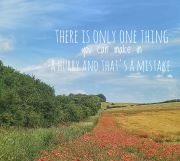
“There is only one thing you can make in a hurry and that’s a mistake.” ( See my slightly hazy, imperfect photo.)

Remembering these words, I think back on all the wrong decisions taken and the mistakes made when I was rushing around, not taking enough care and attention, and crucially not just pausing and taking the time to check or think through what I was doing. It’s even happened with this venture and if this new blog has achieved anything then it has highlighted this and what I need to do about it.

I was watching a video the other day where the speaker mentioned that when we are asked how we are feeling, the word fine is swapped now to busy. We live in a fast-paced world. Our present Government wants the 3.5 million of us who are termed ‘economically inactive’ aged 50-64 to get back out to work and one friend expressed a phrase that we are all units of production. There is a subtle pressure of being idle isn’t acceptable.

Recently, I had conversations about being on the hamster wheel in my younger days of juggling work, house, family commitments and childcare. Of course, we all pay bills, and most of us want a sense of purpose and to connect with the outside world. We can’t escape the demands of modern life.

Becoming busy can become addictive as the adrenal pumps through our body. I researched the subject and stumbled across this blog. I largely have this problem.

I asked myself one question, How does being busy validate me?

1) Being busy must mean I am doing something useful.

2) I’m not wasting the precious time I have.

3) I can achieve something important, a goal or a step towards completing a long-term project.

4) I’m adding something of value to the world.

5) I’m getting ‘things’ on my to-do list done and this gives me a feeling of accomplishment.

6) It takes the pressure off deadlines.

7) Apparently, I’m at my happiest when I am busy.

8) It is the opposite of lazy and being lazy is a word I have never been encouraged to be.

Over the last month, I decided that it was no longer necessary to work at the weekends. As most self-employed people know, working for yourself means that there is always something to do. The email list, financial accounts, the tax return, re-evaluating your website and for me as a TEFL teacher learning the latest teaching methodology or skill. The guilt of the teaching of grammar course I purchased ages ago, that I still have started and the personal development programme from Beth Kempton’s writing courses I have to finish in less than a month, or the content will expire and I would have wasted precious money.

Then there is the constant tweaking of my morning routine so that I can get my work done early, so that time is made for walking, family and leisure. So, on one of these Sundays, I sat in my dressing gown and I couldn’t help feeling this was wasted time and physically felt the restlessness. I had to quieten my mind and just take my time, saying it was OK to have a morning of ‘blobbing about.’ It felt so uncomfortable and is something I find hard to do.

However, being busy isn’t necessarily being productive. What we spend our time on matters, how we do things in the most streamlined way counts. The chance of a mistake is reduced and wiser decisions are made when we just slow down, take our time and hit the pause button.

After the death of Dr Mosley (see last week’s blog)  it has hit home how fragile life is and how living well isn’t just about cramming into your day as much as possible. Days of quiet, resting, noticing, pausing and just being is essential and within those spaces of time a chance to connect with yourself. I confess my whole life ( from the age of 10) has been built on steps towards ‘something.’ Just to walk, smell the air and notice the view is a skill I’m having to learn to do.

Ironically, this week I have had to stop due to a minor illness which has meant I have needed to be isolated within four walls. This has hit home to me just how hard I find it to stop. One day later, I am restless, trying to catch up, and being away from my paid work this week is very frustrating., I am thinking of the things that need doing where I can use my time productively.This is a mindset that needs to change and work in progress.

What piece of advice would you give someone who needs to just ‘be’?

Do you see any of your behaviours in what I have expressed here?

Your thoughts are always welcome.

Until next week.

When Walking Suddenly Stops

  |   By  |  0 Comments

(Written on Saturday 7th June, I have decided to keep my words as they were written, but have since updated them at the end).

I have always remembered what a GP once said to me as we were on a ward round together.

“Any of us could be dead within the next thirty minutes.”

 The Lockerbie air disaster of 1988 had just happened. Lives were wiped out in an instant. A colleague was crying as one of her relatives was on that plane. This made me realise that:

You can be moments away from your death at any point.

You can be only one error away from changing your life or someone else’s for the worst.

A wrong decision can escalate into one long negative impact after another, like a pack of cards or dominoes falling around you.

One of my biggest errors of judgment was embarking on a personal relationship that had catastrophic consequences for me in my early twenties. This was my negative domino/compound effect.

 I now ask myself. What if I hadn’t accepted the idea of a friend writing to a lonely heart’s column on my behalf because she had had so many offers of a date, and I happen to like one of the photos and replies?

What if I had listened to my gut then, thinking I’m insane doing this, and instead of waiting on the corner for the car to appear, just to have gone home?

Trust me, it ended badly. The costs were felt for years to come.

I have been scrolling for updates on my phone regarding the disappearance of Dr Michael Mosley, who was reported missing Friday night after going off for a walk. The highly respected doctor and journalist whose podcasts such as ‘Just One Thing’ have been hugely successful in helping people change their lives for the better, with his lifestyle advice on diet, exercise and sleep. He is mentioned in My Library and someone who is a larger-than-life figure in the world of health, science and personal well-being for me.

So no one was more shocked than I was when I heard he had gone to Symi (a Greek Island) for a holiday with his wife, decided to take a walk from the beach back to his hotel, and to date has not been seen since.

What could have happened to him is still at the time of writing anyone’s guess? He appeared to have made it to the nearby town of Pedi after traversing along a rugged and rocky footpath, where there is the danger of falling into the sea, but his last sighting in the town is where the trail ends.

I think what is so unnerving for me is that he seemed invincible. Dr Mosley appeared to have his life ‘ together.’ in every way possible. He was a beacon of good habits, good choices, healthy, fit and successful. His work on health conveyed a feeling of where positive changes and crucially the right decisions, from the food put into your shopping trolley, to the workouts you gave to your body and mind can have such a lasting positive impact.

 Whatever his motives for deciding to walk in extreme heat, this news upholds two central beliefs I have, that being:

 1) We only have the present moment.

2) We can be one decision away from changing the trajectory of our lives, for better or worse.

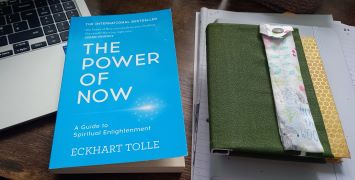
A few years back I read ‘The Power of Now’ by Eckhart Toll. It was suggested that I should read it as I anxiously awaited the results of a suspicious mammogram. This was my second recall, and I was convinced this time it must be cancer. Having known several people with the disease it brought home to me that I wasn’t invincible. I thought about my life in the past and was fearful of my future. I even felt anger, and yes even bitterness that my life could be cut short and for all the things I hadn’t had the chance to do.

Up to that point, I had taken my health for granted, having long-lived parents and thought my genes were strong. It did turn out that I had dodged the bullet once again (the suspicious result was simply a result of skin tissue being squashed and overlapping within the scanning machine) but this experience never left me. Life could not be taken for granted. As I left that hospital appointment I felt I had been given another chance.

Last night I picked up ‘The Power of Now’ and was reminded of the importance of this book. Eckhart Toll states:

” Realise deeply that the present moment is all you ever have. Make the Now the primary focus of your life.”

Life can be a lottery of chances, victories, mistakes, risks and the roads taken and not taken. With wisdom and hindsight, we try to make the best decisions based on our knowledge at the time. We know that life can be snatched away from us, at any given moment and that life isn’t fair or just and it appears that in this game called life, there are winners and losers.

How we navigate it comes down to choice and personal responsibility and to some extent where circumstances can be beyond our control.

As I fear for the safety of Dr Mosley all I know is one thing. The Now is all we have. We cannot cling on to the past, nor hold too tightly to what we hope to be the future. I try to live each day as if it were the last day I have on this earth. Doing what I can to contribute, making a difference, to leave a legacy, spread some kindness, care for others and do something which has meaning to me. That is all I can do.

 This is why I have set this blog up. The combination of audio, my words and pictures finally feels right for me and it is as important as the love and care I give to my family, friends and my paid work.

Take a moment to think about your life. There is a well-known saying that if you knew you only had three months left to live, would you carry on doing what you are doing?

What would you change?

What can you start changing today?

Sunday 9th June:

Update: It is with great shock and sadness that Dr Mosley has been found deceased. He appears to have taken a wrong turn on his walk, made a massive ascent up a hill and nearly made it back to a beach hotel, according to an internet statements from his wife Claire. It would appear that the heat was a likely factor in his death, and a post-mortem has confirmed he died from natural causes. My heart goes out to his family at this utterly terrible time for them. He will be so missed in the world of science and medicine. He leaves such a great legacy but his work will live on.

I still can’t believe that a man representing the right choices for living well could be taken too soon and it makes no sense. Life and death just feel like it hangs by a thread at any moment. We can do our best to not let it be cut short but there are no guarantees.

Live well my friends and enjoy each day. Be grateful for just being here, take hold of the power of Now and never let it go! His death just re-enforces this more than ever for me, and the trivial in life, plus any problems, placed more into prospective.