Category: Uncategorised

Moving Towards Improved Brain Health

  |   By  |  2 Comments

It was the year 2010 and Dad, then aged 82, had come downstairs early, as he always did and sat in his chair, savouring the quiet morning. Only on this day, something didn’t feel quite right. Meanwhile, two doors down the road, an elderly bed-bound neighbour had accidentally pulled her alarm call button and this had triggered an ambulance response. Dad visited her daily to fetch the coal in for her fire and a chat. He later said she had been his guardian angel that day and had saved his life or prevented permanent disability.

Mum came downstairs and phoned my brother (in a panic) who then phoned 999. Dad couldn’t speak. The call came into the ambulance crew’s radio who were now two doors down. Realising the neighbour had made a call error, they were with my dad within five minutes and he received the magic of the Golden Hour, as far as receiving first-line treatment. Dad had suffered a major stroke.

By the time I managed to get to the James Paget hospital in Gt Yarmouth that evening ( my nursing team said we were too busy for me to get the time off work) I remember him sitting in the chair, his hands behind his head wondering what all the fuss was about. He made a full recovery.

However, it wasn’t long after that his eyesight started to deteriorate, and macular degeneration was diagnosed. Suddenly his life was turned upside down with a severe loss of sight. Woodturning, painting and driving were all gone very quickly. Approximately, 10 years after his stroke, cognitive impairment was diagnosed and this then proceeded to vascular dementia. A cerebral vascular accident is a known risk factor for vascular dementia and can occur within ten years of the incident. Dad fitted this time pattern.

Vascular and Alzheimer’s dementia are two words, along with other forms of dementia which sends a shudder through anybody who knows the living reality of this disease. Not seen as a medical disease but as a social disease, it robs people slowly of everything, slowly, cruelly and bit by bit. Loss of independence, loss of dignity, homes sold to cover care costs, life savings reduced to almost nothing and eventual loss of life.

Dementia is now the biggest killer in the UK from figures in 2022 and there is still no cure. But what is being discovered is how crucial vascular health is to our brain health. Whilst we mustn’t dismiss our fight against cancer and heart disease itself, people are beginning to sit up and take notice that our brain, the powerhouse to everything, deserves a more thorough look at how we care for it and what must do to protect it, to give us any chance of preventing or slowing the risk of dementia.

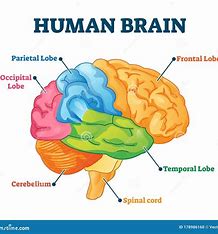
This last week, I watched on You Tube, The Diary of a CEO and Steve Bartlett who was discussing brain health with an eminent neuroscientist. He held a human brain in his hands. It was one of the whose epiphany moments for me. Steve spoke about how every thought, intelligence, creation, life event, experience, grief, job, hope, relationship is within this soft ball of what feels like tofu. What an incredible thing the brain is and how it contains everything about who we are.

There is still so much we don’t know about this organ. Some people firmly believe that the power of the mind can heal disease. Louise Hay in her book  ‘You Can Heal Your Life’ ( see My Library) refers to her cure of a gynaecological cancer and Mary Morrissey ( another personal development mentor and manifestor ) talks of the power of the mind as she was cured of a potentially fatal kidney disease. I also see on X (Twitter) amazing people who are defying all the odds with stage 4 cancer because of utilising the power of the brain. Whatever you might think, I believe there is something in this to be noted.

In this interview, Dr Wendy Suzuki emphasises that exercise, enough to raise our heartbeat, is key to keeping what she calls a physically healthy big, fat, and fluffy brain. A brain that has the ability to have neuroplasticity—changing and developing new neural connections by challenging it, learning new things, and having strong social connections.
I also believe stress plays a huge part too in the development of Cerebral Vascular Disease. My dad walked a lot and was very fit and active but that didn’t stop him from having a stroke. The stress of caring for my long-term sick mother I feel played a crucial part in this.

From last week’s post looking at sleep, to my post Ikigai- finding your meaning and purpose, there seems to be a cycle that comes around to a full circle of where what we do, how we feel, our habits and actions all influences our brain health.

We have to start asking the question what are we doing today that could harm this incredible piece of tofu-like substance that literally houses everything that has happened to us and shapes who we are?

I would encourage anyone to look at the full interview with Steve Bartlet here, especially the first hour.

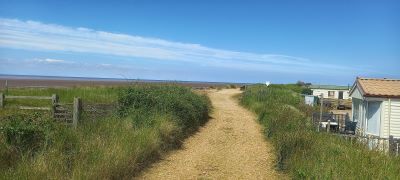
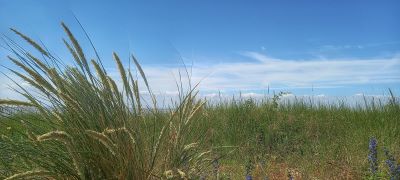
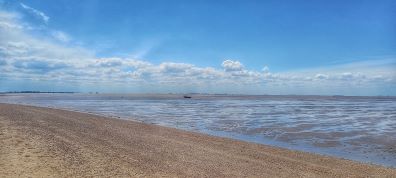
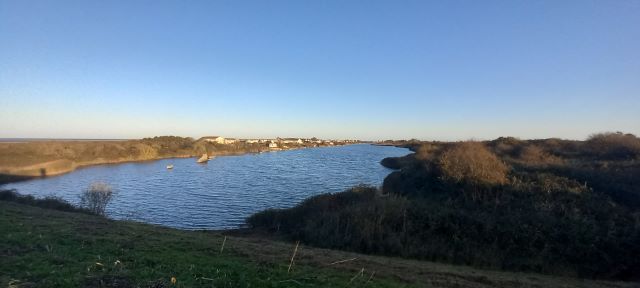
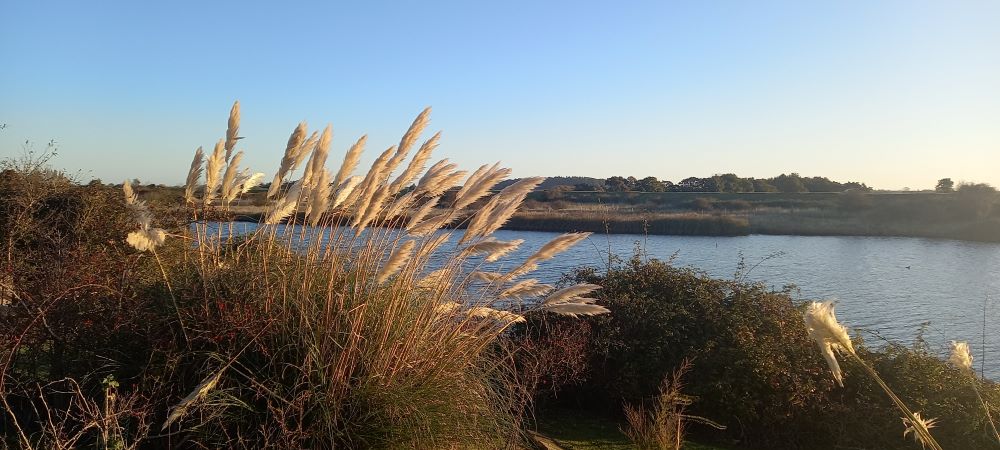
Similar to last week’s post on sleep, I can’t say everything here in one attempt and more will follow over subsequent weeks. For now, I leave you to look at two of my early morning walk photo from a local RSPB nature reserve Snettisham as one of my activities to get better sleep ( one factor crucial for brain health) and ask yourself how well do I look after my brain?
Until next time, where we begin a topic that is a focal point of everything- our habits.

Image of brain copyright accessed @microsoft.com October 29th 2024

Walking along the coast and solitude

  |   By  |  2 Comments

Footsteps Conversations
Walking along the coast and solitude
Loading
/

I have decided to write this blog as two separate posts as I visited two locations on the same day. Each offers a different perspective of being alone and in stillness. To make a connection with the audio, this describes my coastal walk and next week is from a local church and what was experienced there.

Snettisham is on the North Norfolk Coast and what a lovely summer day after all the cold and rain. What immediately hit home was why do I not give myself the space and the permission to do this more. The last time I came to this beach was a year ago.  A blanket of calm swept over me like the tide coming into the beach.

My heart felt lighter, and this felt like another home to me, one without walls, restrictions and representing the highest form of freedom and physical expression. There was a radiance with the sunshine bouncing off the waves. The air looked fresh and clean like a cleansing tonic. As I breathed it in, the words started to form.

I sat, took out my notebook writing a few prompters to guide my message. The bicycle passed, and then I hit the record on my phone. After talking to you, what did I notice?

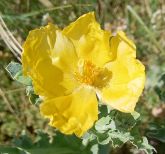
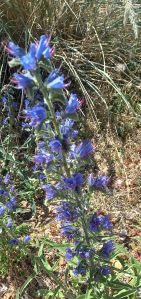
The flowers were striking.

I realised that birdsong comes in waves and little groups. You didn’t hear them all at once.

I walked along and photographed some flowers. Some were a bit blurry as there was a stiff breeze despite it being a calm day. I have chosen the two best here.

There was a little boat moored in the sand. Another was in the dunes. I wanted to photograph them, but I couldn’t reach one because of the terrain and the overgrowth. My mobile phone couldn’t capture the other in the distance very well (sun glare on the screen) At that moment, I realised that the Universe didn’t want me to sell my bigger bridge fuji with my recent decluttering efforts. It needed to be with me and to be here. Mobile phones can also make us lazy photographers. They certainly have made me this way when I look back at some of my earlier work many years ago.

Blue rope cordoned off for ground-nesting birds such as the Oyster Catchers.

 I listened out for the birds, and these were the following:

House Sparrows, Black Headed Gulls, Meadow Pipit, Eurasian Linnet, GoldFinches, Oystercatchers, Dunnock.

A couple of people were using a metal detector to pick up any beach treasure. I could hear it bleep.

In stillness, my eyes were scanning around me. I was starting to notice. As I walked, I had to bring myself back to the view. My monkey mind wanted to create an internal conversation so I brought my attention back to where I was. How often do you get distracted by that little voice prompting you about what you need to get back to, or what happened yesterday?

This wasn’t a long walk and some of it was sitting. I only had an hour on the car parking ticket, due to the costings (coastal car parks in prime areas are calculated carefully. An hour was £2- fine, but anything over time that jumped to £5 -clever and there was a little part of me hurrying to get to the next location as time was precious. I wanted to do as much as I could. Normally this would have been a childcare day. I was only off duty because I was still recuperating (see last week’s blog). This hit home about time is not always as flexible as I think it is and still a works in progress.

I then took myself to Snettisham church where the journey continues ( for next week).

What did I take away from this time?

To be honest, it was a glorious time away.

I felt at peace, happy and authentic to myself and what I enjoyed.

This walk was part of who I am now, a lover of nature, the environment and the outside world.

I felt restored, even for that short afternoon. I could go back to my ‘other’ world happily.

This was a good anchoring experience for me. I thought about the last two years (in particular) and it all made sense and I was proud of how far I had come. I love my chairs and my churches as well. The church came next!

Overall, it was a great afternoon out and I hope to get out to see a poppy field on Friday.

Walking Along a Carer’s Path

  |   By  |  2 Comments

Footsteps Conversations
Walking Along a Carer's Path
Loading
/

Exhaustion is one word I didn’t say in my audio to describe the impact caring has on carers. Also, how caring can affect us not only emotionally but physically, especially those of us with our own health problems. I’m currently experiencing a flare-up of an old back injury due to the lifting of my grandson over several days. It’s easy to push our own needs aside when we are caring for others and just work through pain and discomfort.

I was interested to know the stats for unpaid carers. How many are there in the UK? How much were these people saving the economy every year? I was shocked. Here are some figures to illustrate the impact caring has:

The National Census of 2021 cited five million carers aged five and over in the UK. Yes, from age five, the plight of children in a carer’s role must be mentioned here.

Here are some figures from Carers UK.

75% of carers worry about juggling care and work commitments.

30% report their mental health was bad or very bad.

63% of carers were worrying about managing monthly costs.

The cost of unpaid care in relation to saving the economy money in England and Wales alone is a staggering 162 billion pounds a year. This figure almost matches the funding of the entire NHS for 2020/21.

How many of us define ourselves as carers, or where our labour has gone towards a caring role? What if we sat down and thought about all the direct and indirect care we give in our time towards others? I think many of you would be surprised. I asked myself this question during the last seven days and these are my examples:

I have helped care for a grandson for three days. One of these started at 07.30 and finished at 22.30.

I drove an elderly friend to the hairdressers which took up a morning.

The visit to my 94-year-old father in a residential home required a 70-mile drive.

The next day I saw one of my ‘adoptive style’ parents for the day who was visiting Norfolk before returning home, another long drive. She is approaching 90 and lives alone, and seeing her I know means a lot to her.

After writing this, I found a report illustrating the exact point I’m making. I don’t identify myself as a carer, but when I sat down and thought how much I do for others, it was quite a revelation.

All of the above illustrates one of the main reasons why I walk because it gives me the opportunity to get out of the house and to create some alone time, or an occasion to unwind with fellow walking friends. It creates freedom around my obligations of caring for others. Walking is free, flexible, adaptable and can be done at any free time, for as little or as long as you want. You can incorporate it around other activities, in this case, my two days away visiting elderly relatives. It also eases my back pain as well as helps two arthritic knees, also a casualty of caring when I was a nurse.

Supporting others has a cost, and from what I have briefly read so far, this cost appears to be increasing as we juggle a cost-of-living crisis and dwindling resources within the NHS and Adult Social care. Our national news recently highlighted how many councils can’t even meet basic care needs for people living at home and some are on the verge of bankruptcy.

This brings me to mention the new blogger I have connected with online from the USA and the power of writing to help others. I do hope you will look at Tina’s work. We are now helping each other to get our work noticed so others can benefit from our experiences. You can find her here. She would be so happy if you took a look at her site and left a comment.

The power of community can make a significant impact in terms of stress and the ability to cope. We need to help each other like never before, and the urgency has never been greater.

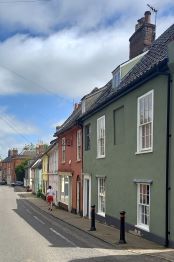
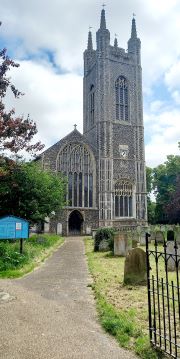
I’ll leave you at the church where I was sitting in Bungay, Norfolk where I recorded the introduction. I was sitting to the left of this picture, listening to the world go by and about to walk all around the village looking at the open gardens. My back was hurting but by the time I completed nearly 10,000 steps ( having enjoyed some beautiful gardens) my pain was gone and I felt so much lighter. I went on to enjoy the rest of my day and spent two hours with renewed energy visiting my dad who has vascular dementia. He was quite bright that afternoon and still knows who I am. I am blessed.

What care have you been giving this week?

What care have you given to yourself?

I know from writing this blog that I need to look after my own needs more consistently because I do far more than I realise for others.

See you next week.

The reference source for census 2021 @ www.ons.gov.uk

Walking Away from Clutter

  |   By  |  3 Comments

(Note, before I start, there is no audio this week. I intended to record once a fortnight, but it has been much easier to do this than I thought., so they have been appearing more. However, this week, the post is long enough without it. It needs no further introduction.

Theodore Roosevelt is quoted to have said.

“Comparison is the thief of Joy.”

This week I have my own adaptation of this beginning with a C word.

“Clutter is the thief of time.”

This is how I felt a couple of weeks ago after a frustrating one, which saw me trying to sell some things without much success. No-one wanted to buy the old camera in the second-hand electrical shop; the antique shop was shut, and I had spent several minutes trying to unlock an old phone (forgotten fingerprint recognition) to find out it was worthless. Also, it would cost me £15 to unlock to access any photos and then these would be automatically removed. Fortunately, I have Google photo back-up. I need them gone on this device for security if it was going to head over to the scrap metal pile in the recycle centre. I like to recycle and as you know from My Storyand am a keen environmentalist.

I have been progressing towards a Minimalist lifestyle for several years and when I moved to my present house in 2014, this was the catalyst for the removal of things which no longer served me or brought me joy, as Marie Condo beautifully illustrates in her work of how to tidy and de-clutter. There is a good article here from the Guardian if you want to read more about her work. It’s a great read.

I have found joy by giving things away many things on free sites and the people met with their stories. What my old shoe rack meant to someone else whose shoes were all over his bedroom floor, the spare slow cooker would help someone living on their own, working 12 hours shifts the chance to come back to a hot meal.

So, on my walk today, I thought more about this subject and wanted to write about it this week. These are the questions I have been asking myself?

How do I feel about letting things go that I don’t use, or don’t particularly like that have been bought by close people? The relationship between possessions and sentimental value and the guilt of letting them go, the psychological tug and pull. Should I let them go or stay? How would that person feel if they knew I had let them go?

 Do I let the 12 Doulton crystal Sherry glasses in their beaten-up original box, wrapped in newspaper go to the charity shop? I don’t want them, won’t use them but they are made of an expensive material. However, I probably would get very little for them financially. Given by my ‘adoptive’ Mother, I called my aunt from Oxford. She didn’t want them but because of sentimental reasons (wedding present I think) she couldn’t entirely part with them either, so gave them to me. And so the cycle goes on. They are currently under a spare bed because I have no where else to put them and have been there for several years.

What about the things in the loft I just cannot part with (because of my memories) but never see the light of day.

Then there are the three dresses of a designer label? Do I give Vinted a go? How much time will this take?

Do I just put everything on a FB selling page and see what happens? I have done this before with success, but these sites are full of potential scammers and time wasters now?

Do I try a car boot again, load up the car, get up at the crack of dawn, to bring it back home if it doesn’t sell?

The books I never read now but still love the subject with their pictures- Floristry.

Clutter takes up time, thinking time, practical time and this is a waste of time to me so my efforts to remove it to free up space in my life, in all ways is a priority.

Then once it is gone to not replace it. How many of us clear space only to fill it up again! How many times have I cleared the garage, the summer house where we used to live only for it to become junked up?  My husband can’t find the hoe in the garage for the mess and wanted to go and buy another one. I said no, I will find it. Clutter can cost us and I am sure we all have two bottle or packets of ‘this and that’ in our kitchen cupboards going out of date because we can’t find the first one.

I live in a home where space is a premium. We have one cupboard, one built in cupboard in one bedroom, a very small galley kitchen (plans to upgrade for increased space) and the hallways on two floors are narrow within a three-storey house. This has meant everything’s locations has had to be carefully thought about.

 Yet, this house also has a spacious quality to it because we have embraced a minimalist lifestyle and serves us in a way that we mostly enjoy. The garage is the last once and for all push and the underneath of one bed in the second bedroom which has memory boxes and my daughter’s christening and prom dress, and yes, those sherry glasses.

Then there are the mounds of paper. We have drowned in the stuff, having done many courses and qualifications in this household. I have just finished converting a study into a part nursery and toiled through 10 years of personal papers. it felt liberating to have the essential ones in one neat, boxed file and essential work resources in one filing cabinet. . A de-cluttered home is a more efficient one, that is certain and takes less time dusting, cleaning and crucially finding things.

There is work to do and decisions to make. On another walk I will come back and tell you how I got on with the answers to those questions when it is all complete.

If this post has sparked any thoughts or desires to aim for a more Minimalist lifestyle and you want to be inspired. then please go to My Library and look up Joshua Becker. He is the number one guru on this subject for me and is so convincing as to why you should give this a go.

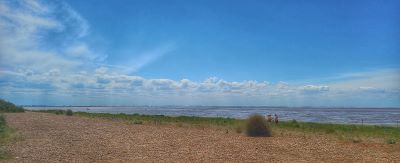
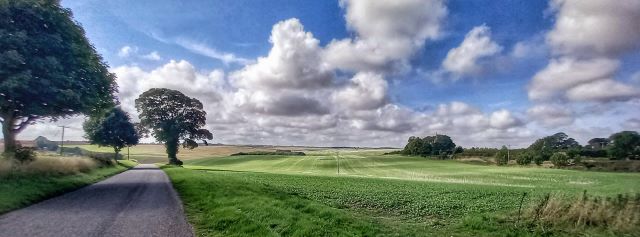
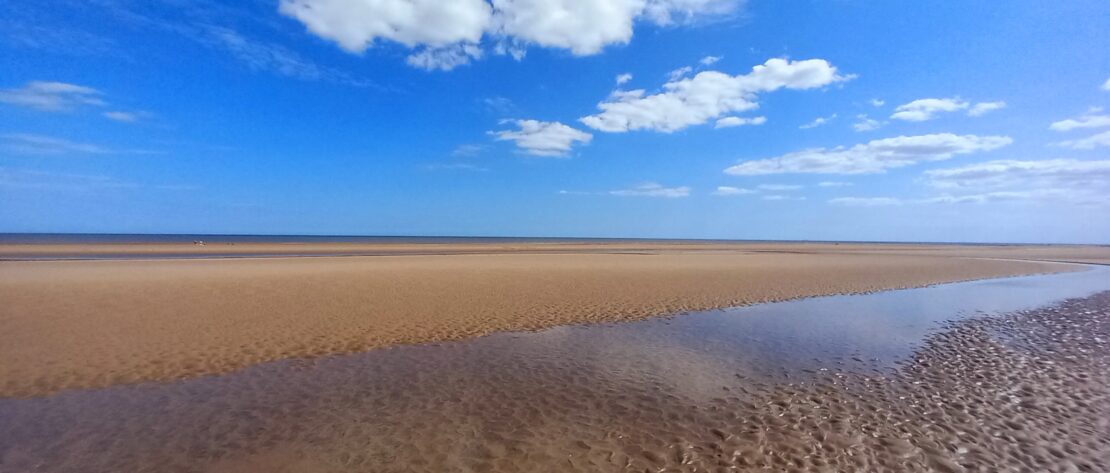
Have a spacious week and I’ll leave you with my pictures depicting space and freedom to ponder over.

Pausing Your Morning Steps

  |   By  |  7 Comments

Footsteps Conversations
Pausing Your Morning Steps
Loading
/

Mornings- I have read quite a bit about them and this time of the day appears to have many benefits. Personally, my relationship with mornings is still in development. I associate myself with being an evening owl (having spent years working evenings when I was younger as a nurse on the twilight shift). Therefore, historically I don’t consider myself a morning lark.  Yet, I cannot deny that there is something quite magical about the hours between 06.00 and 09.00 when I decide to savour them.

For me, leading a busy self-employed life as well as being a new grandmother, mornings are without doubt my favourite part of the day. Now, it is 06.15 and I feel quiet and relaxed and there is silence away from all the ‘noise’ of a typical day.

Some of you may have heard of a book called ‘The Miracle Morning’ by Hal Elrod. Its central message is that a morning routine, which involves rising early is a key factor in personal success and happiness. Certainly, there is no denying that from all the successful people I have read or personally have known in some way, they are all ‘morning’ people. The research into the most successful people’s habits confirms this.

Having a morning routine, which involves structure, discipline and getting ahead in your day undeniably has advantages. I have known past mornings of chaos, lethargy and not wanting to get out of bed, and there is nothing worse than to start a day like this. However, I never really subscribed to the ‘Miracle Morning’ book for one key reason that being I didn’t like the rigidity and the pressure it conveyed to me. The rising at 5 am with the exercise, scripting, reading and so forth felt too overwhelming. Some of the reviews I read from people (feeling stressed and under pressure if they could not manage it) were negative for me.

So, I have chosen a middle ground. I set no alarm clock unless I need to get up of course for something specific. I allow my body to wake up when it is ready. Often, it is early, and the times vary. I have one or two dedicated practices, including drinking water as soon as I wake because our bodies are dehydrated after a night’s sleep. I also listen to my Darren Daily Mentorship audio newsletter on weekdays. Often, I spend several minutes in silence, just listening and doing nothing at all. Sometimes I start work before I go downstairs. I may write, read, or just listen to the radio on BBC Sounds. I have even got up and done a brief walking circuit around my estate.

Yes, I agree this is a luxury and I am fortunate to get to choose how and when I work and how I live. For most of my life, it wasn’t like this, and I too had to get up for shifts, children and the time pressures life give us. I think if I could turn the clock back though, I would have done my mornings differently. I would have allowed them to be times to pause, even for 10 minutes. To give myself the space for a bit of self-care, however, brief that window of time might have been. I didn’t and I regret that but I’m making up for that now.

So, I would encourage you to evaluate your mornings. Is it working? If it is then great but if it isn’t, experiment with it and try out something different. You might be surprised. Be flexible, allow yourself to rest and stop because often that’s when the best ideas and insights of something will show up.  Get up a bit earlier to get ahead, even by a few minutes, if you need to get something important done (and you will feel great for doing that) but don’t beat yourself up if it didn’t happen as intended. Try a different approach next time and see how it feels. I still juggle with what works for for me, but the word Pause within this time is non-negotiable.