( Again, this audio is not a transcription of this writing but as a separate conversation to introduce this post)
Another mini-blog post this week, as Easter events and family staying during this time have meant writing has been difficult. However, I wanted to get something down on digital paper, as writing is a promise you keep not only to yourself but to your audience. So here we go into the subject of Blue and I have found it quite fascinating.
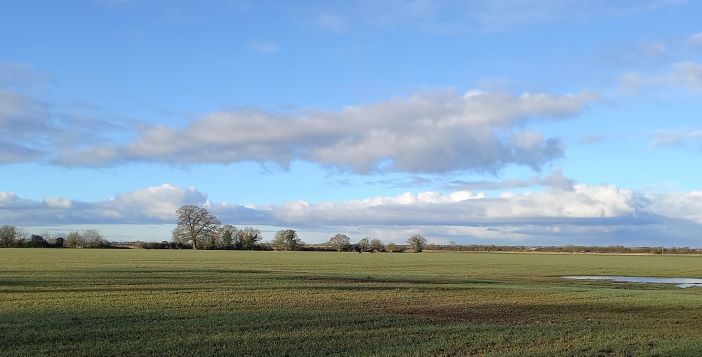
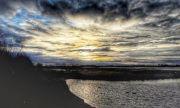
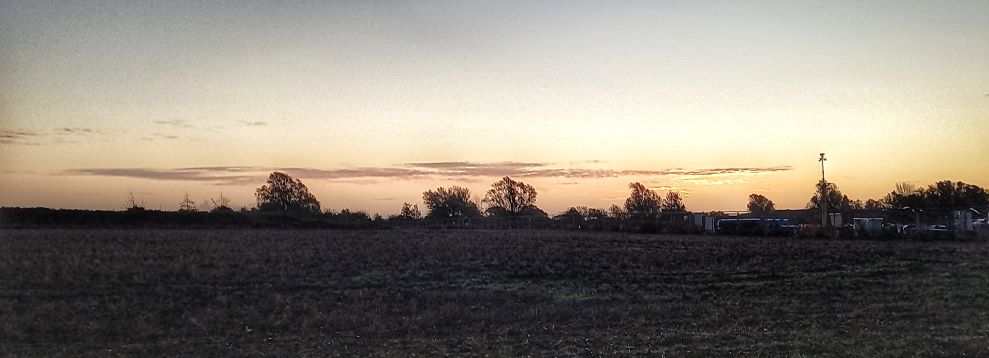
( A sky scene from a local walk often taken with my walking friend)
Nature lovers know the powerful effects of ‘ Green Therapy,’ examples include forest bathing, walking in the countryside and enjoying our environment. But what does the colour blue conjure up in your mind? Let’s take a brief pause and consider this. What would blue therapy mean to you and what other associations are there to it?
Firstly, I want to think of all the connections I know about this colour that immediately springs to mind without too much thinking.
The Blue Moon, Next due 31st May 2026
Blue Lagoon, A spa resort in Iceland famous for its thermal waters
The colour blue as a ribbon in a wedding garter ( symbolising love and fidelity)
Blue John, is the gemstone found in Blue John Mines in Derbyshire. This is now rare and valuable.
Blue skies and seas
Baby boys and blue
Water sports
Blue Blood- deoxygenated blood returning to the lungs.
Blue light from screens which hinders our sleep
Idiom: Out of the blue- unexpected occurence
Talking until you are blue in the face- talking when someone is frustrating you, as they are not taking any notice of what you are saying.
Feeling Blue
Blue Monday- usually the third January after Christmas when people’s bills are arriving and New Year’s Resolutions are dying. This is a most depressing time.
Another pause in my words to think about, from the last one on my list. When you imagine blue, is this a positive colour or one where you associate it with ‘feeling down,’ of cold hands and lips, of winter weather?
Doing a little research, I have discovered that whole books have been written about the colour blue and how diverse it is with many connotations, symbolism and meanings, symbolically, spiritually and practically.
Pondering about blue, I realise this post could open up discussions about other colours and how they affect our mood. What colours are we most drawn to and why? I love the colour purple but am often drawn to wear blue for work because it feels professional and tidy. There is a certain efficiency about blue. It feels neat, smart and orderly and can often be a colour choice for interviews or important speaking events.
As a healing colour, it is not surprising it’s used for images within the medical field and NHS. Blue feels very calming and peaceful to me. The healing and positive well-being effects of blue are documented.
“There’s a reason we think of blue as relaxing; it tends to lower our heart rates, blood pressure, and even our body temperature. Blue can have an effect on the pituitary gland, affecting our sleep patterns, and it can slow our breathing as well. Studies of memory have demonstrated that memory is enhanced by blue light, and blue light can even kill some bacteria!”
Katie Smith @ sensationalcolour.com.
Many of my photos are of skies landscapes and water. It contrasts well with green, yellow and blends with lilac and other pastel and light shades. If I was a painter, I would see blue as one of my favourite colours.
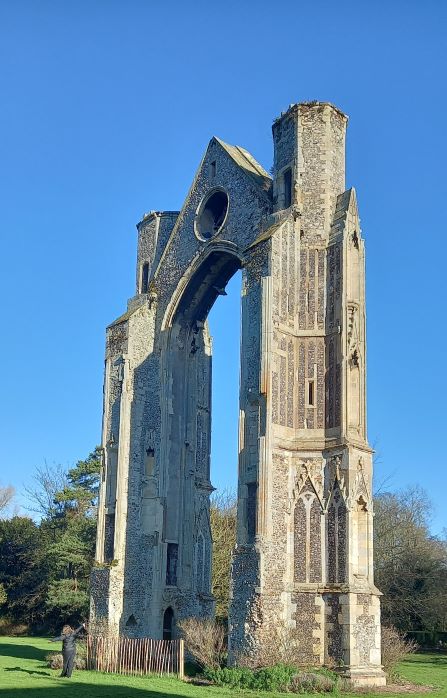
( The Abbey Ruins at Walsingham, Norfolk)
Blue is also seen as very spiritual. We think of Mary the mother of Jesus in a blue robe and blue is associated with the heavens, a gateway to us and God. The colour blue is found in the Old Testament where the tassals of the Israelites were blue to remind them of the Lords Commandments.
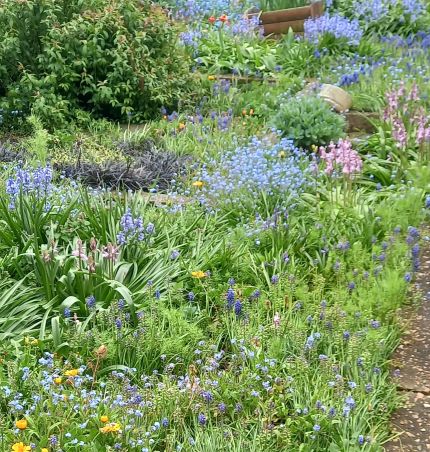
( My friend Jean’s garden in the spring who many of my local friends. Her garden is a riot of blue this time of year)
Then we can think of all the blue in Nature. I love blue flowers in the spring, the tiny forget-me-knots and the beautiful bluebells in May. As someone who loves the weather and looks at the sky daily ( I’m writing a mini weather journal over one year) I realise blue is a very positive colour in my life.
Here is a good article about the meaning of blue and what it represents. There is so much fascinating information to read here.
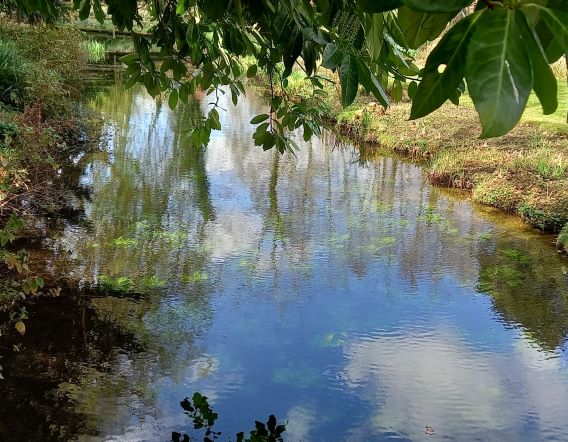
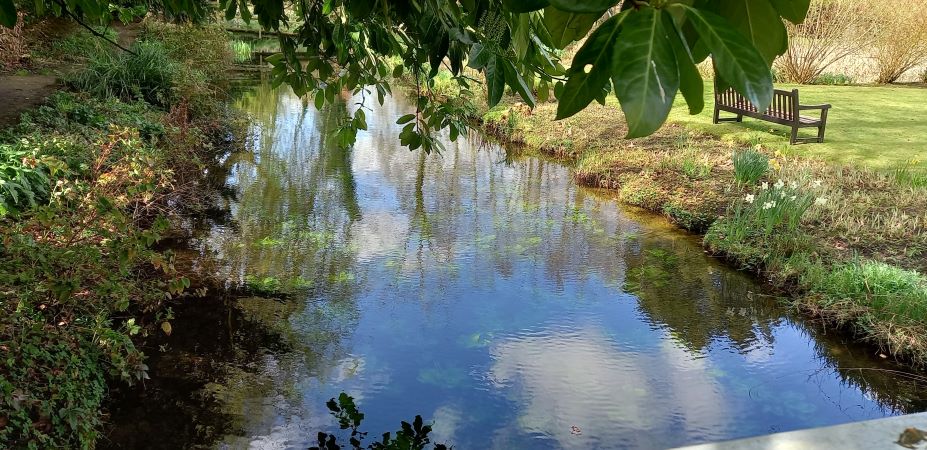
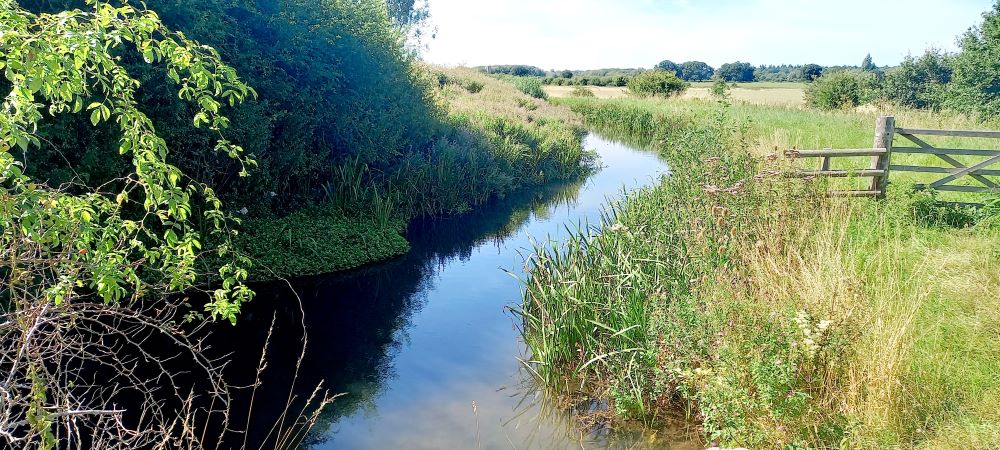
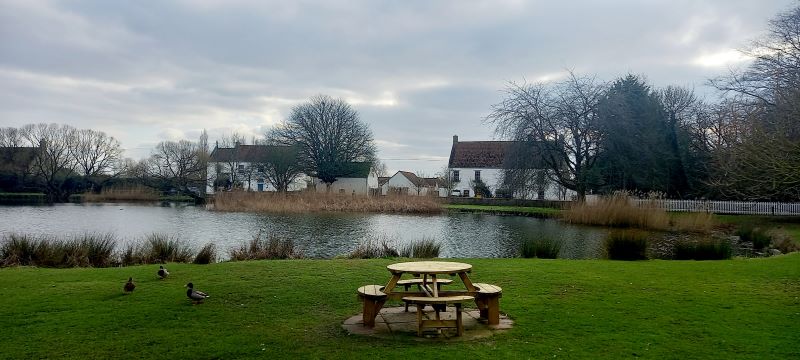
( Water reflections Gooderstone Water Gardens, Near Oxborough, Norfolk)
So blue is a very rich colour and should not be seen as cold and mainly limited to water or skies. If you glance, as I have just done, at the History and other associations of blue, you begin to see it has a lot of surprises. I wanted to do a more detailed study of this colour and appreciate I have just skimmed the surface of this topic. However, this is an introduction for you to reflect upon, and how blue might feel for you.
When you think of water how does it make you feel?
The audio this week, I hoped would be a video but I am still learning how to place them here within a certain bandwidth. Sadly, it had to be converted to MP3 only and you can hear my little grandson in the background enjoying the splashing water. I hope the sound is at least calming.
( Mother’s Day Visit to Gooderstone Water Garden, near Oxborough, Norfolk)
When I imagine water, I hear babbling streams and brooks. I think of the countryside, Yorkshire, The Lakes and can imagine myself sitting by a stream just pausing for a bit. We create ponds and water features in our gardens. It plays its tune to us as we soak up the summer sun. Eating al-fresco with a glass of something cool in hand, as water plays along with the outside orchestra of birds, trickling along without rhythmical hesitations.
Like drinks, water quenches our thirst in more ways than we realise. It does more than hydrate our cells, but appears to replenish our souls. The liquid of life that was a crucial element of when time began. To not have water is the end of life itself.
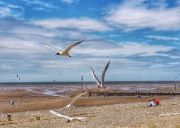
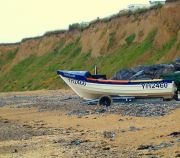
(The Beach at Corton, Lowestoft, Suffolk)
I was born in Lowestoft and the picture of water there for me was crashing waves, foam and tossing seas. The foghorn with November’s mist, the towering light house and the sound of seagulls all around. Often it was windy by the seashore, and I recall walks on Pakefield cliffs on a Sunday afternoon as a child with my parents. Little did I realise then, but I enjoyed walking by the sea and still do. I often want to take myself there after a stressful time or busy period. A place to inhale the sea air, like a medical nebuliser, expanding my lungs and clearing out the dust from my veins.
Many people turn to water when they need some escape or distraction. When we feel a little battled by life’s events or when we want to de-stress. Sports such as fishing, wild swimming, sailing and paddleboarding are pursuits where we can feel restful, even whilst engaged in a physical activity.
I live on the edge of the Fens and drive past rivers and waterways where boats and water stretch into the distance and I wonder where they are heading to. An untravelled place in time, the explorer in me wants to know more and the urge to see where the river bends is strong. The Fens were reclaimed from the water and the landscape, once boggy marshes, makes this corner of my world, now drained, so fertile for farmers.
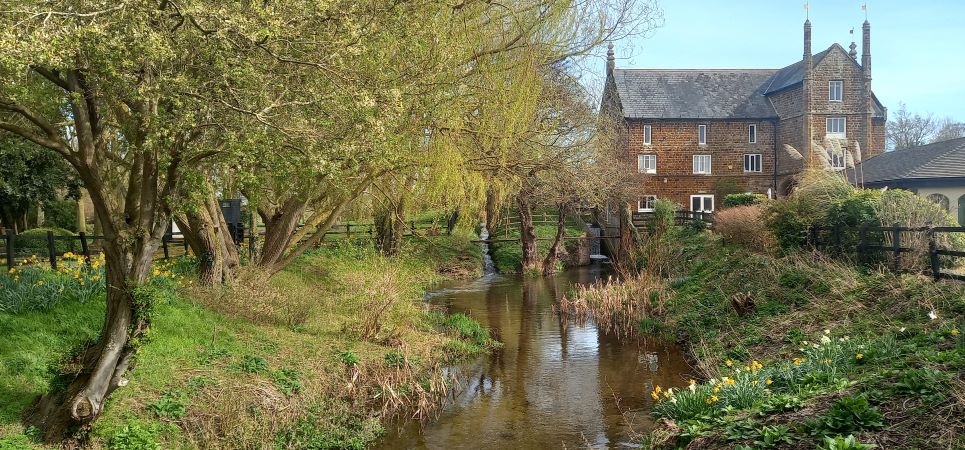
( A local outing to a Lavendar Farm, Heacham, Norfolk Caley Mill)
For me, I enjoy seeing water and hearing its sounds. It has an integral part in the way nature plays out. I have enjoyed being by it, standing near a water’s edge taking photographs such as this one and pondering life as I see its shine, physical reflections and movement.
However, I cannot swim and am afraid when it comes to water which is a shame. I have tried to learn to swim many times and have never managed to conquer the phobia. Walking on dry land makes me feel safer.
For others though, there is a fearlessness about water which is inspiring and poses the question.
Why do you think water can be so freeing?
From my perspective, It isn’t constricted by time, or people’s demands. It goes where it wants to, uninhibited and not afraid. I just wonder when we persue water hobbies do we feel the same? The freedom of being in the open air, the tingling splash on our faces, feeling the breeze, the gliding movement, the pulling forces and the push against the flow.
Water can be our friend when we know how to work with it and respect its power. We also know the devastating effects climate change is having on our world and the heartache it has caused when people’s homes are flooded, damaging land, destroying crops and wildlife.
But let’s leave water though in a positive light. People care about this precious resource and feel invested in it. Not just wanting to spend their time being around it, but also caring about how it is managed in a sound environmental way. We have seen lobbying and campaigning for our privatised water companies to clean up its act as far as making our waterways and rivers cleaner and safer, and locally we have individuals highlighting the need to protect our chalk streams which we are lucky to have in my part of the world.
( A stranger just enjoying the water at lowestoft)
I would love to know from anyone where water is an essential part of their recreational life and how it affects them? Why they like to be near it, or in it? And how does water feel different to those of us who feel safer on dry land?
I shall be taking a week’s break from blogging as the end of the tax year requires some business work. I shall be back in two weeks.
I am inspired this week to write about movement in a different way, having read @BethKempton’s Soul Circle prompt this last week which I subscribe to and an article on Substack on the same subject.
Ironically, to go deep into this word, I had to sit with it for a while and think about rhythm all around us, as a vibration on different levels/frequencies which encompasses so much of our everyday lives. Science tells us we are all made up of energy and we radiate a frequency which is reflected in our moods, thoughts and actions.
But what is rhythm in its fullest and most diverse expression? This week’s audio was recorded, just after a piano lesson and it was a focused hour of creating musical rhythm which is a work in progress for me. But rhythm isn’t just associated with music, is it? Here is my list of rhythms in all its various guises. See if you can think of any more.
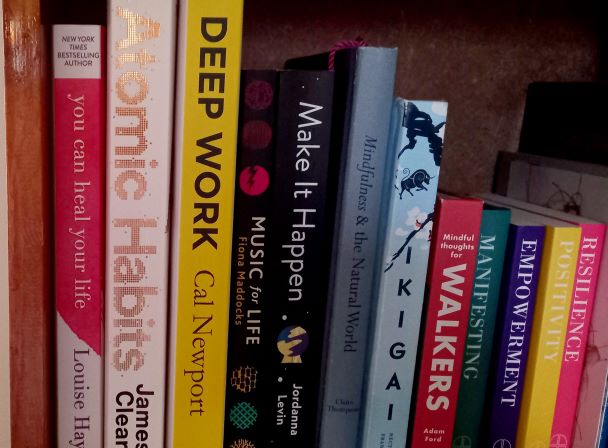
The rhythm of flow in uninterrupted work states where ideas flow and understanding grows. We work best when we enter this state. Kal Newport has written a book about it called ‘Deep Work.’ See my Library page.
The rhythm of the wind flowing through trees horizontally, and vertically, whirling in circles and increasing and decreasing in speed is a fundamental part of our weather.
The rhythm of change as we flow through one day to the next, creating new experiences, work, and pleasure and how we can quicken the pace or pause the note, depending on where we are in our lives.
The rhythm of our heartbeat, the blood in our veins and arteries which keeps us alive and what we need to do to sustain optimum health.
The rhythm of our walking pace, the sounds created from our steps around us, our ears listening to those sounds of nature.
The rhythm of the song as we sing in choirs, collectively one voice in unison, taking part in something where we are one element of a bigger whole.
The rhythm of a clock ticking down time as we move through the years. The little hand marks significant focal points, as the minute hand of our tiny actions and habits influences the main events of our existential being until we get to our midnight hour.
The rhythm of the universe as stars are born and die in the sky, the ever-changing constellations, the moon cycles that observe Universal Laws.
The rhythm of the seasons as we move through winter to spring, summer to autumn, celebrating the equinox, the turn of the calendar and nature’s wheel in a circular motion.
The rhythm of writing as we create thoughts, stories and ideas on a page, the pen or laptop keys moving in tune with our mind.
Rhythm isn’t one thing in isolation but becomes part of other activities and my walk today showed me that spontaneity can equally flow with this force side by side.
This is what happened next:
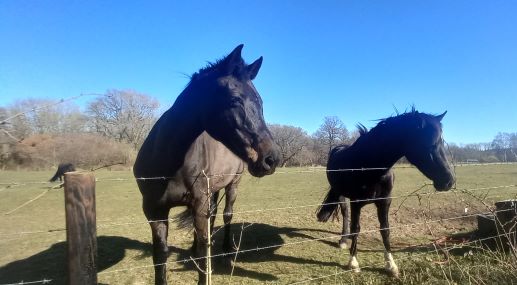
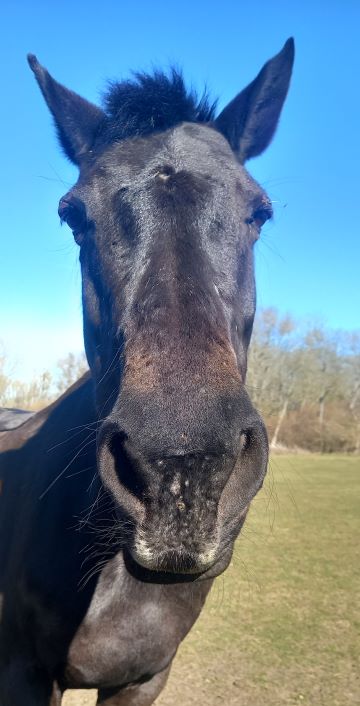
! Having put my phone in my bag, I looked and saw some horses.
I remembered I had an apple in my bag and a tinge of excitement emerged knowing that the horse would like it.
I went up to the horse and spoke to this lovely animal, giving my apple which he/she gracefully took. There was an instant energy of connection. I felt it whilst hearing the crunch from their teeth against the apple’s flesh.
The other horses stirred and took an interest. I would need to come back with three carrots next time I thought. I started to take some photos as the horse drank the water.
As I photographed the scene, a fellow walker and photographer came up and seeing me taking pictures started to do the same.
I spoke and we had a brief chat for five minutes as the rhythm of the camera shutter clicked quietly in the background. He was round about my age and I didn’t want him to think I was chatting him up, so I moved on soon after:))
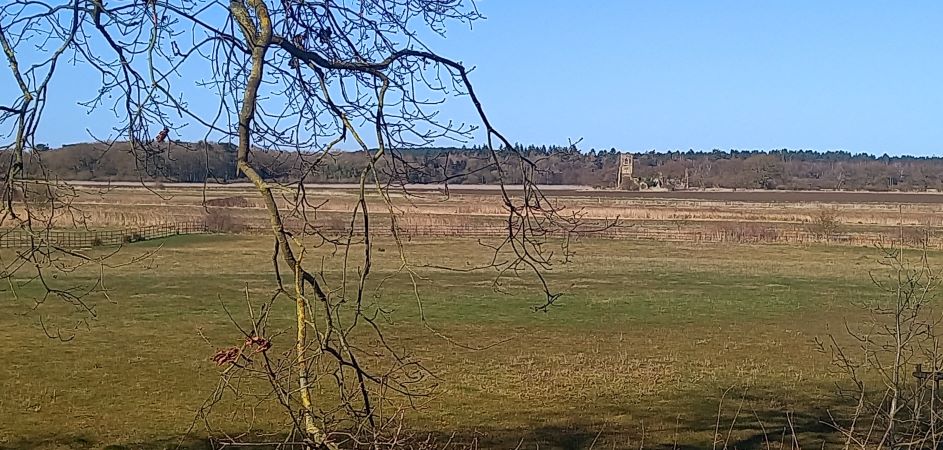
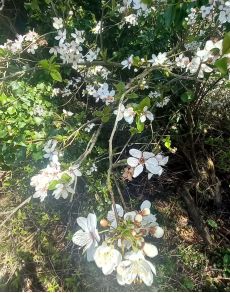
Having walked on I stopped at my favourite spot. I drank in the view, at peace with the world, thinking how I loved this view. I had taken a photo of some spring blossom that had caught my eye. It dazzled in the sunshine with its pure white foliage.
Another walker came along with his walking stick and it felt natural to strike up a greeting.
The elderly gentleman was a widower from a local town. He had lost his wife 18 months before and they both had loved this spot. I said I felt the same. For him It might have been the only conversation he would have for the day. I said I would look out for him as he walked regularly there.
I headed back towards the car and two more walkers with their dogs spoke remarking that the wind was still chilly. I then proceeded to go and see my friend. This all happened in less than 30 minutes.
My elderly friend who had had problems with her phone (now resolved) was glad to see me. I had a cup of tea. We exchanged concerns and updates.
One walk: one afternoon: One hour:
I had not planned any of it, apart from seeing my friend after piano. It had cost nothing, apart from some petrol but to me, this was an afternoon that saw rhythm and spontaneity in their fullest form. The frequency I was feeling was high, a real feeling of aliveness, and gratitude, drinking in the sunshine, the clear blue sky, against the white spring foliage. The birds were singing. This to me was living.
I couldn’t have been anywhere else that could have surpassed that moment. I was in the zone. I was happy. I was aligned with a vibration of a rhythm in time that felt good.
This is what walking does for me. I am much more in tune with life’s rhythms and am starting to feel its full force with quite transformative effects. I am less anxious and my need to tightly grip work, effort, control and figuring out every potential problem with a solution before it happens is lessening. Rhymn’s voice is saying slow down, don’t force, just trust, everything is going to be Ok. Just have faith that life’s timings are all as they are meant to me. All is well.
Coping with Autumn and Winter- a six month journaling experience.
/
RSS Feed
Share
Link
Embed
( The audio is not a transcript but accompanying thoughts for this post and why I did this)
The following in Italics are small extracts from my journal following these last two seasons. I struggle with both, and by writing an account it set me on a path to discover any patterns of behaviours, or triggers (positively or negatively) influencing how I felt during these these times.
As I was writing I was consciously and unconsciously putting systems in place to help me, as I discovered how I was feeling. I’m glad I did this and now wish to share the main points as I wrote about the changing seasons, the weather, nature what was happening and my mental health. These extracts are in note form and are not intended to be grammatically perfect.
31st August: Blue flowers in fields against Elderflowers and red berries. Summer and autumn are starting to merge. A lot to look forward to. Some nerves about being back teaching tomorrow after a month off from the Farm.
3rd September- Cloud, damp, everything has suddenly changed, change here too. Work stress, internet down at home, mood lower already. Tinnitus up, need to stay calm and steady.
20th September- we had a full harvest moon. The bush outside my house seems redder with the berries. Mood is restored as calmer house resumes. Already starting to plan for Christmas.
Revisting these early entries have already given me some thoughts about why doing this exercise has been so helpful. The emerging patterns of feelings what triggers any stress and why do I find this time so challenging?
Some people love winter, but for me, it seems heavy, and when weighted down by external events, it feels like you are bashing against an increasing cold wind and barrier. Traditionally, this has always been the most worrying time, the Christmas bills, heating, the cost of Christmas itself, various birthdays and the cars which had to be serviced, taxed and insured weighed heavy on my mind.
At the end of September, I went on a canal boat retreat and the attendees wrote about this transition of autumn through to winter. I journaled about how I felt about it in the past, compared to how I was attempting to feel differently about it now. It was a lovely day of deep writing and travel along the river at Ely. My daughter and I attended and it was great to connect with like-minded women.
Retreat day:
Autumn past:
“The fall of the leaves shows the darkness of that bare place, branches cut, barren and lifeless. I dreaded the clocks going back. It felt like I was going backwards with them. Time sat heavy and foreboding of the winter ahead.”
Autumn present:
I don’t know how it changed. It started from that golden ball of light and liberation within. The lighter self, the clouds of fog and depression gone, and it was like the shutters from my eyes were blown away to renewal, not death and darkness but harvest and hope.
This showed me how I associated the winter and the dark days ahead with my past depression notably occurring in 1999 and 2010. I went on to write that this season (autumn) should be about preparing and self-care for what lay ahead, taking stock and harvesting all the bounty of the spring and summer months.
“ I stand in the forest and see the golden greens and browns of effort and energy in front of me and know that this autumn is not an end but only a time to evaluate and to see what has worked. The soil is enriched with my leaves of activity, returning to the earth ready to sit quietly through the winter months, ready to step forth into the spring with a newness, a bud, a flower ready to begin again.”
I was full of buoyed-up optimism at this point. After the retreat, I write of seeing the Northern Lights in October, of the mists coming, and how the light continued to change in November. I planted cyclamen with their bright colours to see from my chair in the lounge overlooking our small garden, and booked a wreath-making workshop for Christmas. Something to look forward to seemed the way to get through this period. My daughter who finds winter equally stressful was doing similar things.
17th November- Harder- illness soon arrives with the autumn colours.
(Having a small toddler in our family now meant that we were being bathed in childhood germs).
Hand, Foot and Mouth wiped out most of November and lingering colds, though I was staying strong and virus-free up to this point elevated by Vitamin D, Zinc and Magnesium from my Joint supplements. My daughter’s plans for little activities to look forward to were largely wiped out from her calendar with quiet resignation. The wreath making workshop never happened and we did ours at home for my daughter’s 30th birthday.
26th November- Feeling like I have come out of a mini tunnel.
I had been to Oxford to see my aunt and as I entered the door back home, I didn’t come out the other side until now.
8th December- Possibly taking up a weather journal next year.
I had connected with a local village on Facebook and a guy was writing a weather report each day. I read and commented every day, showing my appreciation and encouragement, knowing what it feels like to write into thin air for no one to comment or possibly even look. My roots of loving the weather returned no matter what it threw at us.
This was a new activity. New activities I realised helped me. Husband says I’m happiest when I have something on the go. I also wrote:
“ Christmas, you go through this with high expectations only to see the hope dwindle with the light. Early Christmas planning is key.”
15th December- I take up poetry again after witnessing a glorious sunset. “ A Sunset by Little Thetford.” A small snippet.
“December midline and already fading
The Winter Solstice soon
Turns nature’s wheel again
Shifting time,
I move on.”
18th December- The first snowdrops in the garden. This winter has gone quickly so far.
3rd January weekend away with my lovely friend Sue to see at the ROH Cinderella in London. Pure magic and what a wonderful two days away.
8th January. There has been frost, rain and winds. Birds finally returned to the bird feeders today after hanging them up on Boxing Day and waiting.
The new term of teaching begins. Vanessa Thomas’ Mindful Narrowboat has been a beautiful find. (YouTube) Her journals were being bought for my birthday.
I started to feed the birds again and going out and recording winter bird songs. The robin I can now identify and the house sparrow. I can pick out a Tit but not know which one yet.)
18th January- A weather journal started since the New Year and a gratitude journal.
I had started morning walks and this was helping me want to get up and get on. The gratitude journal comprised one main event of the day and three things to be thankful for. Research says it’s powerful but it felt quite functional at first. It grows on you and the feeling increases as to the effect of it. Both are ongoing and I’m committed to completing them for the year.
25th January. Had a nice birthday. Quiet, spent at home. Susan and her husband came to visit. We had cake and I made soup. It was just what I wanted as I had had a big 60th birthday party last year. I went out for a walk and the sky was blue.
9th February
Illness, virus, hard, SED feel it in its grip, sitting no good, combined with malaise and grey, comfort in words, reading and writing. I’m an armchair hiker and traveller ( Reading Salt Path, plus sequel). I need to go to the nature reserve again. I feel its call. Trees for me are a healing place. Looking out of the window, there have been mists. The time has felt like a tunnel again. Only outside and fresh air can help.
14th February
Antibiotics (tonsillitis been ill since 27th Jan), blue skies this afternoon – the light is returning both physically and mentally. We are nearly out of this tunnel. Being outside and walking are two factors that I shall carry with me as remedies for surviving winter, even if the weather is terrible.
Had hit a terrible low by this point and my brain I felt was failing. Even got the name wrong on one of my substacks posts about my dog. I was forgetting things, stewing about the past, ruminating and this felt like a deep crisis. I turned to meditation, prayers, breathing and simply acknowledging past grieves and regrets. There were powerful conversations at home.
20th February. I walk Paige (daughter’s greyhound) at 17.30 and it was still twilight. Real progress with the light now. It’s becoming warmer too. (I don’t think it was but maybe I felt warmer as the end of winter was fast approaching.) The tulip heads are showing more in the planted tub outside. Tomorrow, I walk.
28th February
“ So we end this section here after six months of observations of autumn, through winter and out the other side. I shall do it again next autumn and winter to make any comparisons (given any changes). The daffodils are out and blue skies, The birds were singing at 10.00 am.
28th February continues
“Recording here has been a useful anchor point as this winter, with so much illness, has been the toughest winter yet. Spring really does pave the way for change, hope and a new tomorrow.
Tonight is the planetary alignment.”
Reflections:
At the end of this record, I was sitting on a swing in a local park breathing the air saying we have done this. A friend had sent a song for me to listen to. I smiled and thought my friends are such treasures. I would not swap my life for anyone’s because I have these people in my world. My family of course are vital but I want to acknowledge here how friends really are a lifeline.
Having read this fourth draft back, I realise that I was putting in place further strategies and systems as each new challenge or feeling arose.
My brain health has become a priority over anything else. I have placed an emphasis on the physical but now this shifts.
More sleep, I go to bed regularly and earlier and the morning walks I have noticed help me sleep better.
Move, really move more. I have started some indoor exercise on YouTube to old 1970’s 80’s music. Exercise has got to be something you enjoy, otherwise you just don’t do it.
Less screens: did some research on this and my grey matter and hippocampus have clearly shrunk due to 15 years of phone and screen time. I am saying wrong words I’ve noticed called ‘slip of the tongue’ and stress can do this. Cognitively I have lost a lot of confidence in my ability to process things.
Truly, I have even been quite paranoid about early dementia but I don’t fit the early warning signs, apart from what I have just mentioned. I’m a high-functioning individual but running a self-employed teaching business has meant 24/7 hustle and effort since 2018 and I am tired. I realise I have been close to burnout and I know what care responsibilities mean. I am also slowly doing some more teacher training to keep the numbers in my classrooms buoyant and fresh with new ideas and improved teaching methodology. My life like many of us is a juggling act.
No daytime TV. It’s on here for hours at a time for my husband but I am not being sucked into it.
I have been worried about walking in isolated places on my own and tend to stick to safe streets, but these are becoming boring around my housing estate. I want to be out in the wild. I tried to sell my little commute bike but had no luck. Maybe that was meant to be. The bike is being oiled and I plan to bike out a bit, walk and then get back on it again and bike off should I feel the need to. I think it will give me more security and I can go out further quicker, especially on workdays when time is less.
If I can next year, I want to take a proper winter holiday with warmth and sun. The endless grey at times has been so hard.
Big observation: Winter and Christmas are not the same. They are together but they both need to be dealt with separately. They are both stresses in different ways. Recognising the need to get early Christmas planning was a lifesaver for this last one and it will be started even earlier this year( the commercial aspect to it) which I hate. This will leave the way clear to just deal with winter as it unfolds, plus any spiritual celebrations.
Markers and rituals; Turning my seasonal photos over in their picture frame and my picture of nature’s wheel have felt grounding.
So work in progress. Has anything jumped out for you here? I would love to know. One thing that jumped out for me is how many times I have used the word tunnel.
If you have struggled with this last six months or experience Seasonal Effective disorder , I would really encourage you to do this. I have gained so much from this experience to move forward for next time. For now Spring is here and I am so glad.
Full circle, I am in Oxford again and taking a break next week. I shall be back here on Wednesday the 19th March.
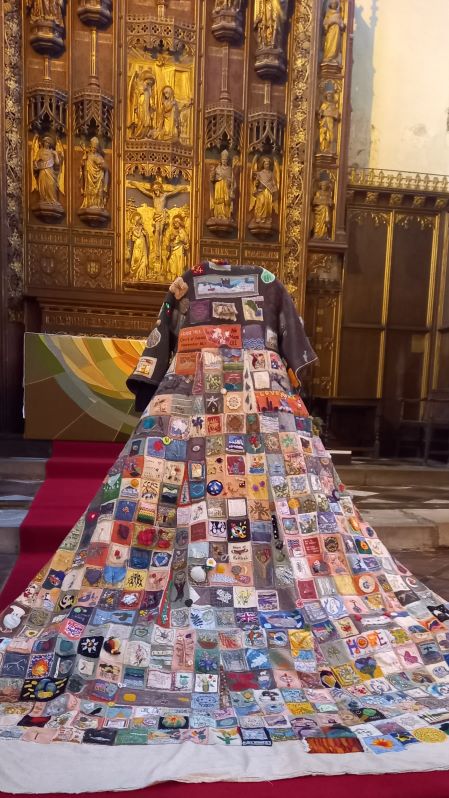
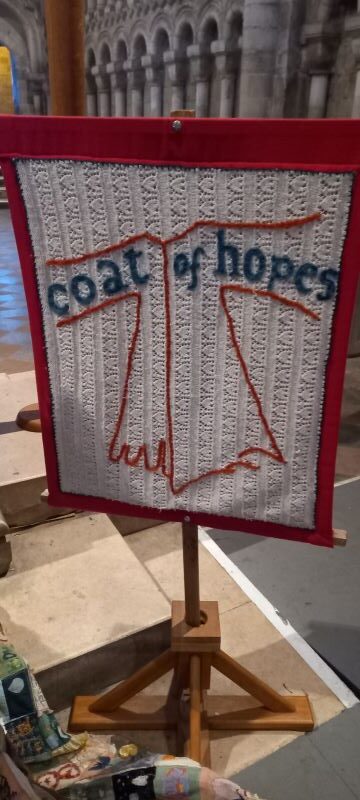
What a simple yet wonderful idea, started by one person concerned about climate change and who wanted to do something about it. And there could be no better way than to create something quite extraordinary, not with words but still with hands. This time the pen was exchanged for a sewing needle.
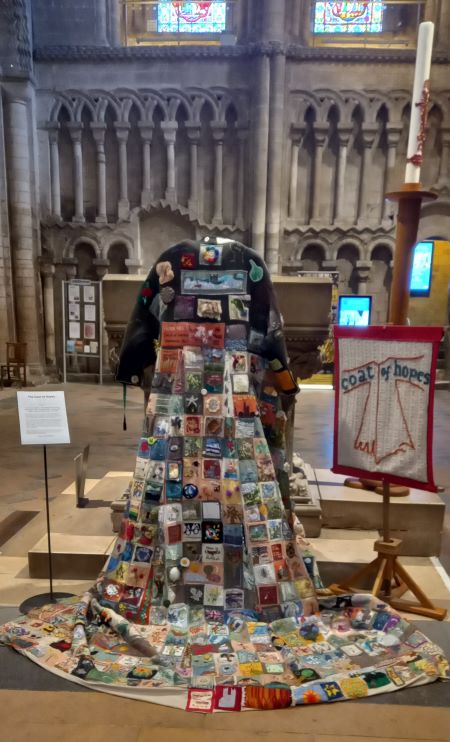
Welcome to the Coat of Hopes exhibition that I was fortunate enough to see, visiting two places near to where I live. I was so drawn to this story. In response to our ever-increasing concerns about the future of our planet, the coat was started as one piece of sewing to be worn on a walk starting from Newhaven in August 2021 to the COP 26 Glasgow, UN Climate Change conference.
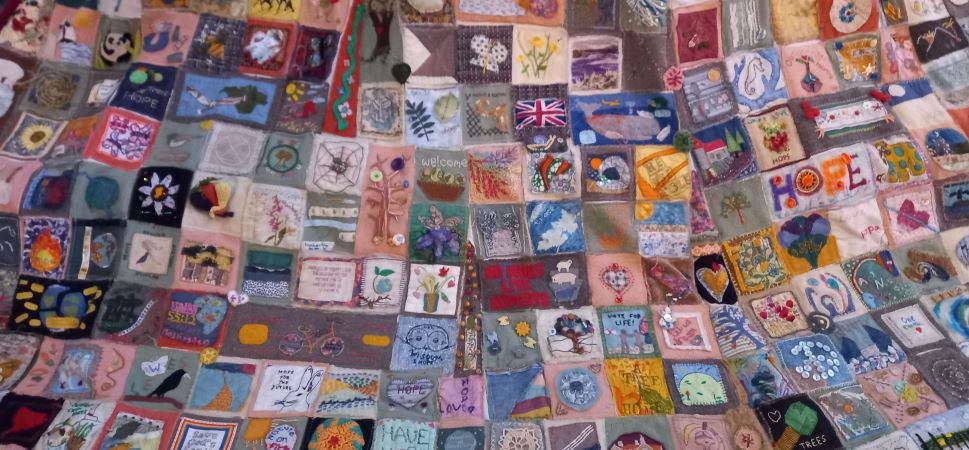
Sewing hopes and feelings into the fabric:
As you can see from the pictures below, people have been invited to contribute to the coat, sewing, weaving and embroidering their hopes, grief, memories, tributes, and feelings into this living piece of work, as it walks its way along the UK. Covering over 1500 miles so far, and resting in various places as a pilgrim of peace whilst carrying an important message that climate change is urgent.
I first saw it in The Minster in King’s Lynn on February 7th and thought, why not follow its journey, as it moved on to Ely Cathedral? So, I made a short journey to Ely the next week to view it there, light a candle and pause to think about my place in the world, and within the environmental emergency facing us today, as we all live in our ever-consuming world.
A close friend and I went to The Minster together. We met an old teaching colleague who was with a school party from the local Greyfriars Academy. We had both worked there as teaching assistants. This was a very happy time of my work life, and it was so good to see children drawing their own patches in pencils and crayons that will be locally exhibited. Children are the future custodians of our planet and the more aware they are of the need to care for it, then our world may still have a chance.
The coat moved on:
On my next visit to Ely, my husband David came along with me. We spoke to a Guide who was from America and who had been living in the UK for a while. We had a conversation about the alarming political changes in the West, the awful conflicts going on and man’s desire to conquer and claim through bombs, terror and ideologies. Whilst this was a serious conversation, it was also uplifting to know there are so many kindred spirits who have a deep desire for justice, humanity, and care and who stand in unity for world peace.
However, what was a piece of serendipity was when we popped into the gift shop on the way out and saw a distinct display of, by now, familiar drawings waiting for me, as a nudge that we are all on our own pilgrimages.
“ Oh, look David” I said. “ It’s Angela Harding’s drawings from the book The Salt Path” having never encountered anything like them before. So many lovely gifts to choose from and I was tempted by the notebooks (but I have so many) that I chose a paperweight instead.
Freedom to fly, and freedom to just ‘be’ were the thoughts that came to mind. Come home and sit on my writing desk and write with me, I thought, as I looked at the beautiful glass artwork. We are all walking and flying together through life.
Where next?
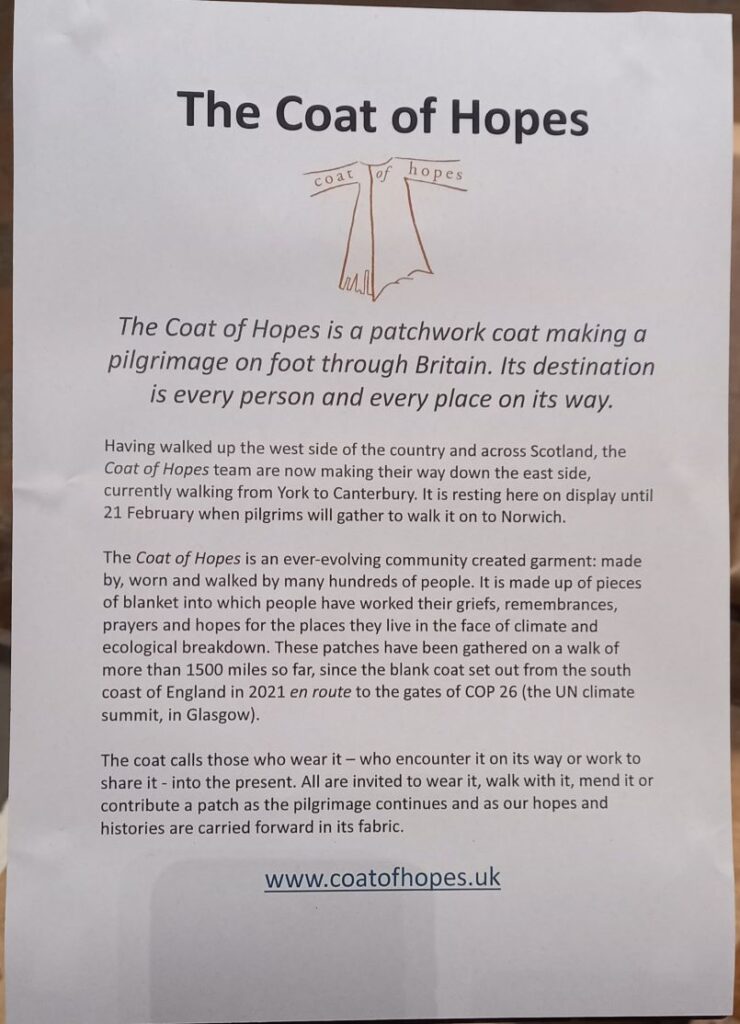
The Coat of Hope Exhibition will leave Ely on the 21st of February and will be walked to Norwich Cathedral. You can see from the image below some information concerning the Coat’s progress.
The aim is to keep going with more people sewing and walking until finally a pivotal point comes when the whole world realises that we are all going to have to work together if we have any hope left of saving this planet.
In my own corner of the world, it is predicted that within the next forty years, with the increased warming of the oceans, King’s Lynn will be under the sea, most of Lincolnshire gone and my town in Southwest Norfolk will be on the edge of survival.
How can I leave this not on a sombre note?
People and projects, scientists and researchers are working hard to find solutions to our climate crisis. We must hope that it is not too late, and that we can find some way for everyone to have a place in our modern world. Where we can reap the benefits of civilisation, the progress in better health ( having just finished a course of penicillin myself) that man can thrive, but crucially that animals, wildlife and ecosystems can live with us.
There is enough for all of us, but we have to share and we need to respect all living creatures. We must challenge corporate greed, have practical and sustainable ways to work and travel, and where money and power are seen to be all races to the bottom.
Time to embrace a pilgrimage on thinking about what truly matters most.
What matters most to you?
Until next time, when I will continue this theme on the history of pilgrimages and why people walk on them.
Hello, I'm back, What's next and a book everyone should read.
/
RSS Feed
Share
Link
Embed
This audio is not a transcript of this post but a compliment to it. The images are mine and while they are not taken along the Southwest coast of the UK, I felt they reflected the mood of what is written here which discusses The Salt Path, by Raynor Winn. Do read on as this is a book everyone should know about.
An extract from the prologue.
“We ran back down the beach, the swash landing far above the shelf and rushing over the sand towards us.
Wait for the backwash then run to the other side of the channel and up the beach.
I was in awe. This man, who only two months earlier had struggled to put his coat on without help, was standing on a beach in his underpants holding an erected tent above his head and a rucksack on his back saying, run!
Run, run, run!
We splashed through the water with the tent held high and climbed desperately up the beach as the swash pushed at our heels and the backwash tried to push us out to sea. Stumbling through the soft sand, our boots brimming with soft water, we dropped the tent down at the foot of the cliff.”
The Salt Path by Raynor Winn, Page two.
The beginning:
I can’t remember exactly when or where I first heard about this book, but it had been on my list as a ‘maybe’ read for quite some time because it clearly was about walking. After Christmas, with book vouchers in my hand, I decided to walk into our new local bookshop and it was there ready and waiting for me to buy.
I read the first 22 pages and stopped, saying to my husband you must read this. For the next week, it was read by him with a speed that astonished me, as much as this couple running to safety on the beach.
My husband, who had not read a book from cover to cover in over twenty years, sat and absorbed every page, like the water soaking into the South Coast sand. I knew then that this non-fiction story was very powerful, even before I properly got to read it myself, because of his reaction and the attention it received. He was transfixed, moved, sometimes nearly to tears, as he told me little snippets, not wanting to spoil the story for me. The couple in this novel embarked on an epic journey, walking the 630-mile Southwest Coastal Path.
So, what is so special about this book?
It can be summarised very simply. This is a tale of unbelievable resilience, determination and bravery in the face of the most extreme storms in life. A couple who had lost a legal business dispute, lost their farming business, their home and their life savings in the space of a week. And when you think circumstances couldn’t get any worse, the husband of the couple was diagnosed with a terminal neuro-degenerative illness.
There was nothing to lose because they had lost almost everything:
With £320 left and a barn rental, which meant they were eligible for £48 a week in tax credits, they bought and packed up in two rucksacks, a tent, two light sleeping bags and some essential provisions.
With limited space in mind, they also bought Paddy Dillion’s book ‘The Southwest Coast Path: from Minehead to South Haven Port,’ a small guidebook, with a waterproof cover and an Ordnance Survey Map.
Raynor describes the day they walked away from twenty years of family life, running from the huge chasm that had been left. All they knew was that they just had to walk, to try to process what had happened, to find themselves again, and all that mattered was that they should just start because what else was there to do?
Did they complete the journey?
Yes, they did but I won’t spoil the story for you, you should read it for yourself. They had to walk it the opposite way around from the guidebook because they started with the easiest section first due to the approaching Winter weather. So, they did have to pause and take a break, and what should have been a few weeks took them a year.
At the end of the book, Raynor writes:
“At last I understood what homelessness had done for me. It had taken every material thing I had and left me stripped bare, a blank page at the end of a partly written book. It had also given me a choice, either to leave that page blank or to keep writing the story with hope. I chose hope”
From part six Edgelanders chapter 21 Salted, page 272.
What does this book tell us?
Firstly, to never underestimate the power of walking, Moth (the man in this story) managed to defy all medical odds and walked the path coming out stronger on the other side. More than a decade later he is still alive and started a new career.
That with resilience, bravery, fortitude and courage you can face the most impossible of circumstances. As they walked, they faced hunger, cold, and immense challenges most of us couldn’t have coped with. As they faced the most gruelling conditions, problems,abuse and setbacks, I could feel my brain physically tighten with the pain of the stories’ grip and felt elated when they had a victory however small. It felt so real within the pages.
How did this book speak to me?
Once I had finished it, I thought, how could I ever complain about anything ever again. That my life and its struggles were nothing in comparison to what these two people faced. However bleak or dark your situation looks you have a choice to be the victim or the victor. And how crucially, out of the empty devastating loss, miracles and new things can grow as lives are reborn and shaped into something amazing.
It taught me about the enormous prejudices homeless people face as they were shunned, walked past and ignored as some people withdrew in fear thinking they were no more than criminals, alcoholics or drug addicts.
The amazing power of two people totally committed to each other and a love that endured everything.
What happened after?
We are now reading the sequel ‘The Wild Silence’. And there is one more ‘Landlines’ where they walked from the Scottish Coast back to Cornwall. What I can say without giving away too many details is that they now champion the plight of homelessness. Raynor writes about nature and wild camping and both participate in charity events to raise money for Corticobasal Degeneration, CBD.
What are we now going to do with our own Salt Path?
Having been so inspired by this story, we want to see this path ourselves. We have booked to go to Cornwall in June staying in St Austell, one location near the path. We won’t be wild camping or homeless and we will have more than £48 spending money for the week. In many ways, I think we will feel shallow that it is too easy for us to stand and stare, taking a short walk (as holidaymakers) given our health complaints.
But, I hope we will come away with the enormity of what they did, the respect and admiration, and maybe we can be a little less fearless ourselves in our own lives and be grateful for each and every day with what we do have. I hope so. I will update you once I have read all three and have been on this trip.
The Salt Path by Raynor Winn is published by Penguin Books, Random House UK, 2019 and is being released as a film this year- the Sunday Times best seller and Costa Book Awards, shortlist.
Finally, I hope the people who treated them badly watch this and see their own character starring back at them and will leave a sobering and humble thought.
When I first had the desire to create this blog, I had to ask myself why I wanted to do it. I knew that this would take time and commitment to write each week. Was my literary offering going to make any real or lasting difference to the way I saw life, got on with my life, and maybe help others to pause to think for a minute about theirs?
Here are some of the main points I have discovered since starting this in April and maybe the odd surprise:
You can produce anything, in spite of the busy and sometimes chaotic life you lead, if you really want to.
Your will and commitment to something matters.
There is always a new way, a different angle when looking at anything.
Small things can often offer the most memory or magic.
That one window into something can often open another door that you were not expecting.
You never know where one action, one chance decision is going to take you. I think of the summer in 2022 when I saw Beth Kempton’s Summer Sanctuary free writing course and thought why not? My inner voice was saying you have no time to do this. My outer voice was saying do it anyway and what a decision which has been so influential.
Life truly is a journey, where each twist and turn connects up to make the path that you had no way of knowing how to put together- it just happened.
Don’t overlook an opportunity but also go with the flow.
Don’t be afraid to try something that maybe doesn’t make sense at the time.
Your habits are everything.
Observe write down- events and experiences. Observations do several things. It helps to ground you when things are tough, and you can look back to learn from them. It can help you slow the mind, calm you down, and help you focus on the things that truly matter to you.
Any regular project worth doing well often takes a huge effort and can get easily derailed if you let other factors get in the way.
Back at the end of the summer, I said I would write in a separate journal over the next six months my travels into winter and out the other side into the spring because I struggle with this time of the year. I have kept it up and am now thinking of going back to my childhood and starting my weather logging again. Something that strangely excites me.
The Big 60 Milestone:
This year, my 60th has been an incredible and overall, a happy year. I started a list of things I wanted to do, have kept going and growing in my career, improved my home substantially with money that I have been proud to earn, worked incredibly hard, and have loved being a grandparent, though that is hard work too. I have created a beautiful space to work in and have lots to be thankful for.
Writing the Next Yeardown:
One practice I do every December (encouraged by business and motivation life coach Fiona Brennan) which I have been doing since 2019 is remarkably powerful. I write out the next year in the present tense about what is going to happen as if it were true. In June, I review and tick off what has happened and in December I do a final tally. You would not believe what comes to pass.
I said this year I was going to win something, though it may not be necessarily money. You would not believe how many competitions that have presented themselves. I have taken part in some of them- so far nothing has come of it, or has it? One thing I have done which I have never done before is to enter a poetry competition last month. The results are out in February. What a miracle it would be to come somewhere. But to me, I have won something already far greater- a belief that I can have a go at anything if I put my mind to it.
Magic and Mystery:
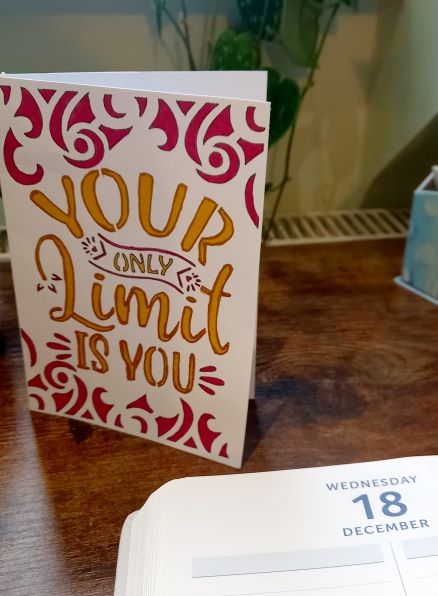
Two other events happened around the same time as this which I felt were hugely significant. Someone, I know felt compelled to send me this when she was crafting. I saw that as a sign.
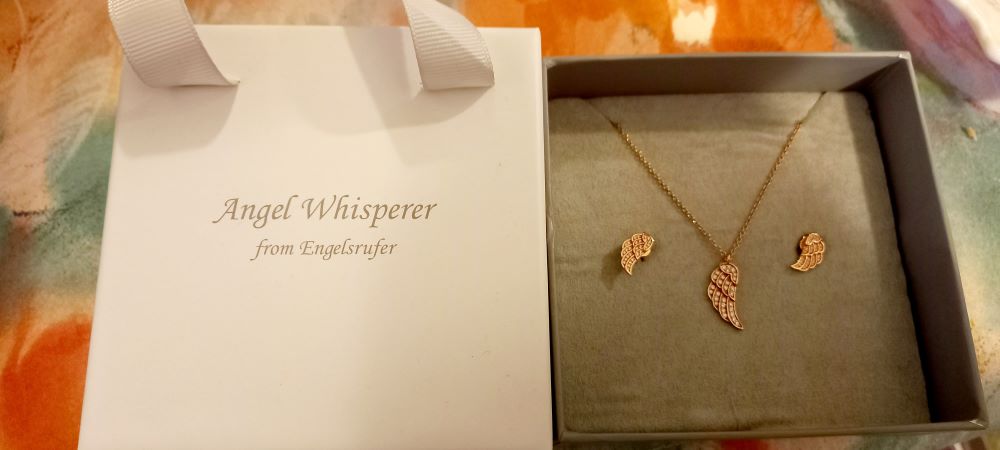
My aunt had seen some jewellery called Angel Whisperer. She had walked past the shop for six weeks and then one day woke up saying Helen must have this and I have no idea why. She jumped on a bus and thought, if the said pieces are still there it is meant to be. She gave them to me in November during my last Oxford trip. I love the symbol of the wings whispering go on Helen, fly high.
She doesn’t even know about my blog, or even what I write about. How I sometimes feel the presence of angels looking after me and my family. I tried to share a little bit of this with her but she is not of the same mind as me so it’s difficult. I think she understood some of it though.
So, as we approach this season of Christmas maybe magic and mystery can truly happen- one where we can dream and ponder, hope and wonder, be inspired, love, and form a deeper connection with something greater than ourselves that cannot be bought, or won, but can be claimed through the power of belief.
May you have a blessed Christmas and a prosperous and happy New Year.
This blog will take a pause now for a rest in January and where I need to turn my attention to my revised work website. But I’ll return at the end of January with fresh content and new ideas. I am excited about next year and I can’t wait to see what happens next….
Happy Christmas and hope you have the start of a prosperous New Year.
( The audio is not a transcription but acts as an introduction to this blog post. and recorded at the weekend.)
There are books written just about Habits, how to form good ones, and how to discard the bad, so this post can only touch the surface. Therefore, I see this as an introduction and some thoughts on the effects of developing better routines and ways to organise your time and your life.
Some of you may have heard of James Clear, the giant in this field. The subject of how simple tasks repeated multiple times equaling compelling results. This momentum creates a clear line. A line that separates who gets ahead and who gets left behind.
Small efforts over time is the path to choose:
Habits in themselves as tasks are often very easy to do but the action of doing them consistently to create a long-lasting benefit is often one that people fail on, me included.
In his book ‘Atomic Habits’ James’ title suggests there is a power of great magnitude at play here which when utilised can move mountains and catapult us like atomic bombs into the stratosphere of success.
His Newsletter 3-2-1 is one that I never bypass each Thursday to read in my inbox. Both James, and Darren Hardy in his book ‘The Compound Effect’ write about the 1% marker in improvement in small and seemingly insignificant efforts producing remarkable results when compounded over time.
We know this works within the laws of financial Investment so why not within the laws of one own self and the way we go about doing things, or not doing them? Alternatively, we all know what happens when the ship or the plane is of course by 1% and as James writes:
“Conversely, if you get 1% worse each day for one year, you’ll decline nearly down to zero from the 37% increase if you became 1% improved at something.” Habits are the compound interest in self-improvement.
But you may ask, I am comfortable with where I am so why should I bother?
Well, a positive effect of developing better ways of doing things, or to be frank making better life choices in one’s action have an overwhelming effect on productivity, lack of stress, more knowledge, potentially better income and can lead to more meaningful relationships.
Ask yourself one question. What one annoying thing do I want to shift out of my life? What is stopping you from doing it? I think we all have at least one habit we would like to ditch.
The Habit Stack:
In ‘Atomic Habits’ James talks about how to make a new habit stick and it’s by a system called Habit Stacking. Simply, this is where you build a new activity from a previous action already ingrained and running on autopilot. An example for me would be once I wake up, I drink a glass of water. To give you the best chance of success, have the glass ready and full on the bedside locker the night before. Similarly, have your clothes ready the night before to get straight into them in the morning so you can start your day. I forgot to do this two night ago and spent 10 minutes rummaging around as to what I should wear in the ironing pile and wardrobe.
Peter Sage also suggests that setting up your day the night before is crucial to how the day is going to start. This may sound all rather boring and almost obsessional, but it works when you have a brain like mine, that can easily get distracted or you forget to do something. This is the prime reason why my habits fail- I simply forget to remember because the new action isn’t as yet automatic. How many times have you done something because that’s always the way you have done it? Here at home, we are learning to put the car keys in a new place and is a good example since having our new kitchen.
Why does this matter?
Consistency can start well but then slack off. This is my number one trait and habit killer. We start out with good intentions but then fall off the wagon. Often, I have to say to myself just start where you left off. I then ask the question, why do some habits stick better than others?
I suppose it’s all about how much you really want to change and can see the benefit from it. In his book ‘Make Your Bed’, the author states that the first thing you should do in the morning is make your bed because it sets the scene for the new day and psychologically creates a tone that sleep is over. This is done daily by me now and it has a very powerful effect.
Mel Robbins also talks about the five-second rule as far as getting up. Count to five and move. For me, that’s much harder to do.
Joshua Becker (Minimalist writer) encourages us that if you can do something in a minute or less, don’t put it off, do it, that’s really powerful especially when it comes to washing the dishes and having a tidy kitchen as a starting point in the morning. But when it comes to the big decisions that takes you away from comfort zones and procrastination the effect can be even more profound. Before publishing this I sent an email this morning asking for a meeting which could shape my professional work for 2025. This all feels really good which brings me to another point- that feeling of being in control and when things work well.
What has this meant for me?
Certainly, I would not have achieved as much in the last 10 years if I hadn’t adopted these principles. This blog would easily have been a thought still inside my head and not a reality. For me, time management and day efficiency, a commitment to get something finished and discipline have all been built into my life because of some non-negotiable habits I have created for myself.
What is the number one enemy of a new habit?
I’m afraid to say it but loved ones are the enemy and external extractions. Yes, the people we live with can ‘stuff us up’ and pull us of course. We fit in and conform to other people’s desires and weaken against their own bad habits.
“Would you like a chocolate dear from the goodie bag?” says my husband post Halloween as I fail miserably at drastically reducing my sugar intake once and for all. As I am writing this, there is the ping of the phone telling me I have a message that I am curious to respond to.
Now it’s time to get moving and out for my walk. I have managed three walks within one hour of waking this last week, a first and yes, I have been sleeping better as a result.
Until next time when I share one new hack with you I have introduced into my life since writing this. I will be partly working in Oxford where I am going for a pre- Christmas visit to a relative, another example of how I have built freedom into my life to do what I want and when.
Have a great week.
References: Atomic Habits, James Clear, 2018, Penguin Random House, UK page 15.
( The following audio is not a transcript but as an accompaniment to this blog post. It sets the scene and I hope you might listen to this first.)
In her book ‘52 Ways to Walk’, the author Annabel Streets focuses in chapter 10 research which states that if you take a walk within one hour of waking then this will help you sleep better at night. Light helps to set up our body clock for the day. If we expose ourselves to it within one hour of waking, this enables every cell in our body to set themselves up as their own timekeepers. So, in effect by walking early in the day, you are creating a signal later on that it is time for bed.
Get-upand start moving:
Annabel further explains that you don’t need a long walk to get this effect. Just 10 minutes is enough and don’t be deterred by cloudy or rainy weather, like I have previously. Even dull days can provide enough lumens- one measure of light- to produce results that are more effective than indoor lighting can provide.
In addition, morning light triggers the feel-good factor hormone serotonin giving us a boost to get our day going and crucially this converts to melatonin later in the day to help us sleep at night. However, our light sensitivity is at its lowest first thing in the morning. We need a burst of light to help us wake up and this sets our circadian rhythms, essential for a good night’s rest.
The late Dr Michael Mosley also re-enforced this message in his Podcast and book ‘Just One Thing’ about how to live better both physically and emotionally. It is listed here as number one in this reference.
My own experiences of sleep disruption:
There are many reasons why we can sleep badly, and I too have had periods of acute insomnia. Usually, this has been when my brain simply can’t switch off at night because I have had something specific on my mind, or I have simply worked too late and my brain is still active. I’ve also noticed any late-night phone screen time particularly plays havoc with my sleep pattern.
Personally, I know I should have my phone out of the bedroom and get an alarm clock if I need to set one. However, my problem is I like to have it with me because of the sleep meditations I do at night on YouTube. Night meditations have really helped calm my mind before bed and sometimes I have fallen asleep with them playing in the background.
However, my mild phone addiction means I can’t help but sometimes scroll on social media before settling down or absorbing yet more content online ranging from all my favourite channels, to simply watching how to do calligraphy, (the very thing I’m learning in the evenings to help me get away from screens). Hence, it can be a vicious cycle because I find it hard to put the phone down, and that disrupts not only when I turn the light off but also how much blue light I have been absorbing. I’m not sure what the answer to this is.
I also nightly mist my pillow with lavender spray. This may act simply as a placebo effect but it is something I enjoy and it has a soothing smell. My friend regularly provides a nice one from Avon and it is something I don’t want to be without.
Having a reduced body temperature at night also aids sleep, so keeping bedrooms at a cooler temperature will also help. I sleep with light covers and no heating on in the bedroom, but then I do live in a three-storey house and the heat rises. My bedroom is neither too cold nor too hot.
The Menopause and Sleep Disruption:
The menopause is also a challenging time for women with regards to sleep. This did affect me for a short period of time. I mention this briefly as I have no real experience of how traumatic this stage of life can be, but I do appreciate that it can affect women badly and in many different ways. I would encourage any women reading this to leave a comment about these experiences, if they feel able, and any suggestions which might help. At least there appears to be more professional advice available something that our mothers never had.
Sleep is such a huge topic that one blog post can only touch the surface of a sleep’s pillow. My aim is to set aside one week of mornings where I will get up and walk within one hour of waking every day to record what effect this has. So far my attempts have been feeble as often it has started to rain. Yesterday, I got up and got out and I felt really good afterwards. My day started and went really well for the rest of it, and I noticed I had more energy and focus. Do say what works for you and what also contributes to your own poor sleep quality, if you feel able to share, so we all might get a better night’s rest.
Until next week and thanks for stopping by for anyone new here…….
References: I hope these will help you to further explore this subject.
The audio is not a transcription and leads us into the subject of today. I would recommend listening to this first. It is less than two minutes long.
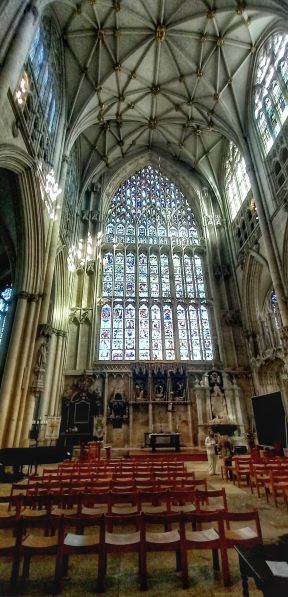
( This picture was taken while I was sitting for a few minutes in York Minster this last week)
I returned from York last Sunday. There had been a lot of sitting in the car because of the traffic due to road closures and accidents. Getting to our destination had taken several hours. What should have taken three hours took much longer.
Thinking about this week’s post, I have decided to focus on the subject of sitting. Why is it so bad for us, and what can we do within our C21st lifestyle to mitigate its risks caused by it? Upon returning home I started to listen to a Podcast by Mel Robbins about the subject and felt this was worth exploring. So here is what I am going to do.
Over the next week, I am going to consciously think of ways I can increase my standing and mobility whilst working from a desk largely at home. Also, to consider how long I spend driving to and from work and going about my day- to- day life. I will record what I have done and how I have felt. Simultaneously, I will gather more information about the benefits of not sitting still for long and crucially the statistics for why sitting for long periods is so bad for us.
I will then share these results in my next week’s post. In the meantime, you might want to think about your own occupation and whether sitting for long periods has been a problem for you, or something you want to do something about.
Having both a long-standing back problem and osteo-arthritis of both knees was a big factor in my decision to start walking, knowing this activity helps. Now, I think the evidence suggests this goes way further than maintaining general fitness and joint mobility levels.
That’s all I want to say for this week as I am getting back into my new weekly work routine which is largely going well. Do listen to the audio if you haven’t, as it is a good connection to this post and demonstrates how I like to keep this blog on the move as I record whilst going about my daily life.